What Did the Moon Look Like on My Birthday?
Your Birthday Moon: Why It Looked Different Than You Think
Everyone has a birthday moon. The night you were born, the moon was in a specific phase: maybe a thin crescent barely visible in the twilight, a bold half moon splitting the sky in two, or a full moon bright enough to read by. Whatever it was, it was yours, and it was unique to your date and your place on Earth.
Most people have never seen what the moon actually looked like on their birthday. They might know their zodiac sign or their birthstone, but the moon from the night they arrived? That's a detail most of us never think to look up. And when you do, the answer is more interesting than you might expect, because the moon doesn't just change shape from night to night. It also looks different depending on where in the world you were born.
This guide explains how to find the moon phase on your birthday, what it means, and why the moon you were born under might look completely different from what someone born on the same date saw from the other side of the world.
How to Find the Moon Phase on Your Birthday
The moon completes a full cycle every 29.5 days, moving through eight distinct phases: new moon, waxing crescent, first quarter, waxing gibbous, full moon, waning gibbous, third quarter, and waning crescent. On any given date, the moon is in exactly one of these phases, determined by its angular position relative to the Sun as seen from Earth.
To find what the moon looked like on your birthday, you need two pieces of information: your date of birth and the location where you were born. The date determines the phase itself (how much of the moon was illuminated), and the location determines the orientation (which way the crescent tilted, and how the moon appeared in the sky from where you were).
There are a few ways to look this up. NASA's Dial-a-Moon tool lets you enter any date and see the moon's appearance. Timeanddate.com has a similar calculator. But these tools typically show you a generic, "north-up" view of the moon, which is only accurate if you were born in the northern hemisphere at a mid-latitude. If you were born near the equator, or anywhere in the southern hemisphere, the moon would have looked noticeably different.
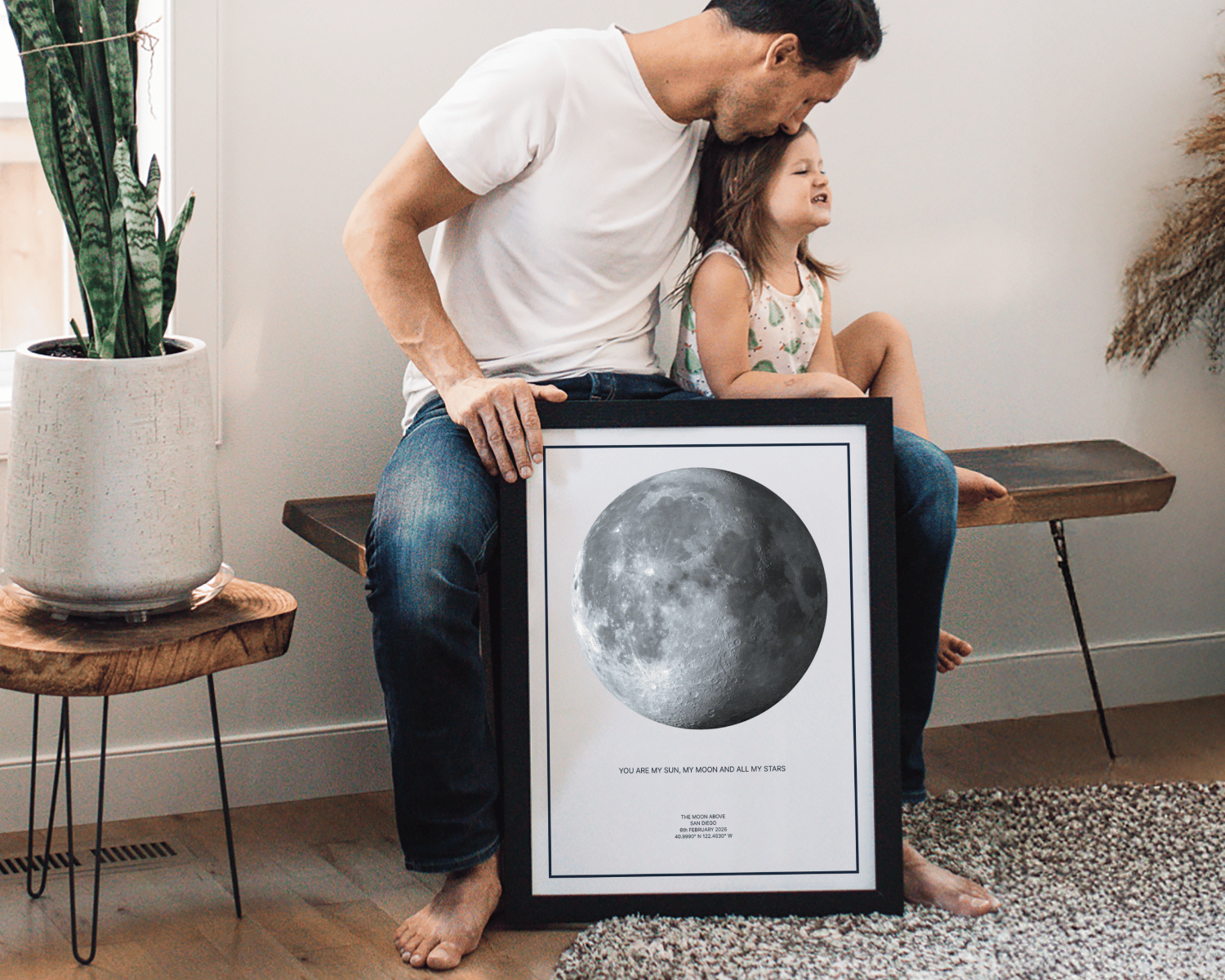
For a truly accurate picture of your birthday moon, you need a tool that accounts for both date and location. The Night Sky's moon phase print does exactly this: it calculates the precise lunar phase and then adjusts the orientation based on the parallactic angle at your birth location, giving you the moon as it actually appeared from where you were born.
The Eight Moon Phases, Explained
Understanding which phase the moon was in on your birthday starts with knowing what the eight phases actually look like and how they differ.
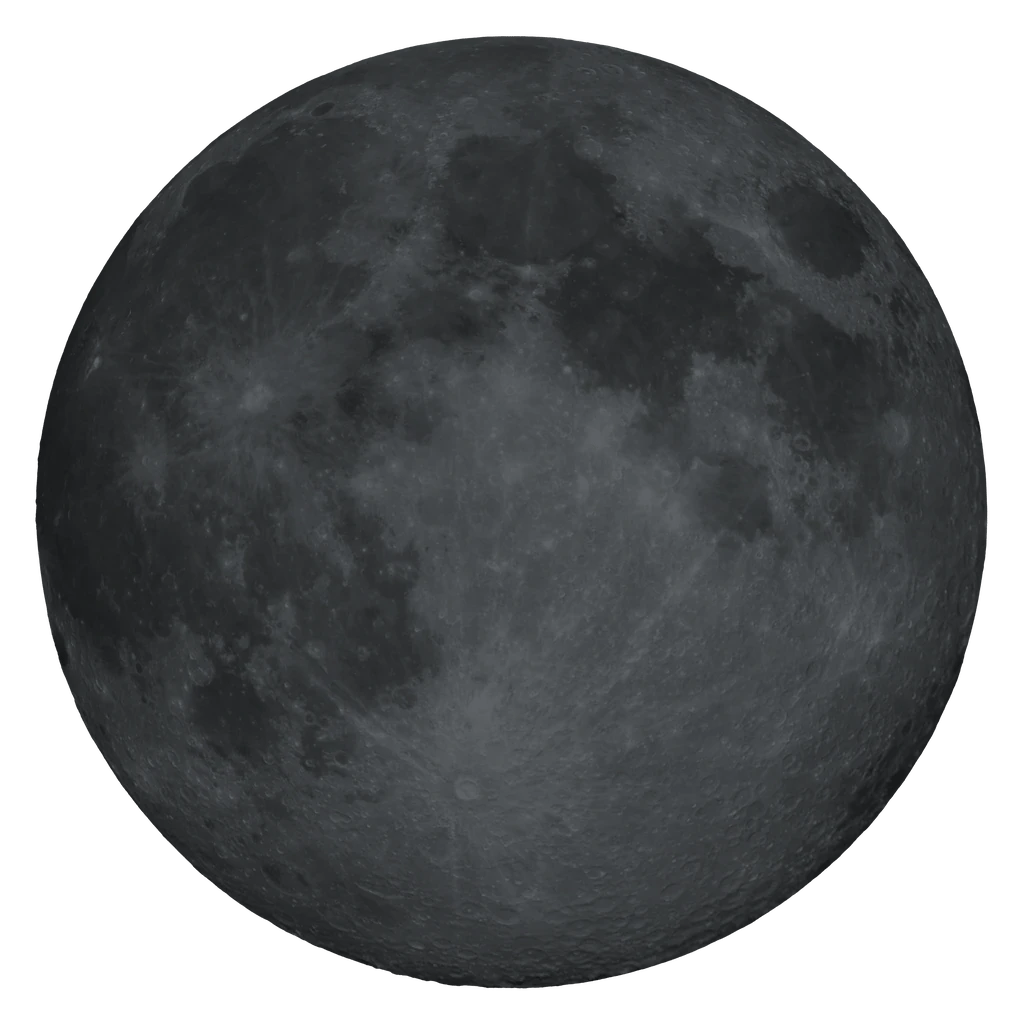
New Moon. The moon sits between the Earth and the Sun, with its illuminated side facing away from us. It's essentially invisible. If you were born during a new moon, your birthday moon was dark, a blank disc in the sky. About 3.4% of people share this phase.
Waxing Crescent. A thin sliver of light appears on the right side of the moon (in the northern hemisphere). This is the classic crescent shape: delicate, almost fragile. It's visible in the western sky just after sunset. Born under a waxing crescent? Your moon was one of the most visually distinctive phases.
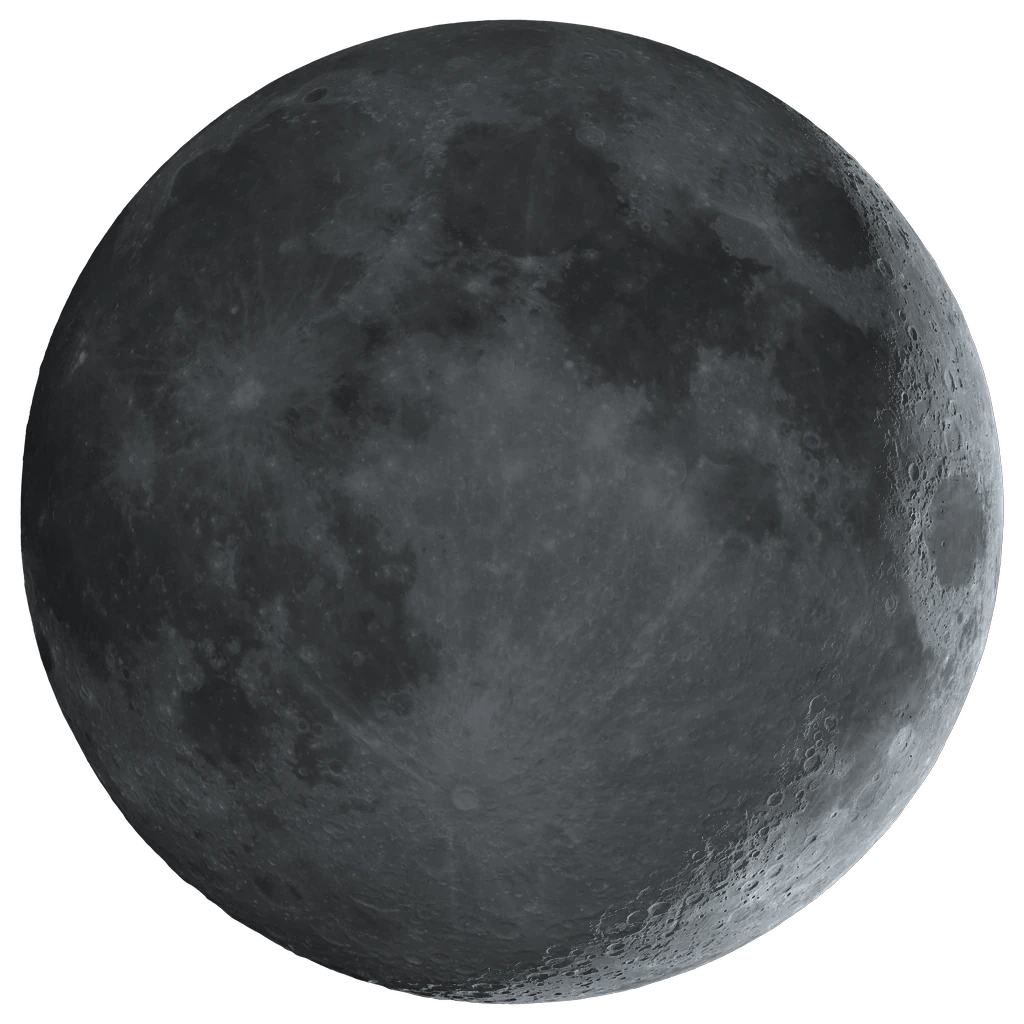
First Quarter. Exactly half the moon is illuminated. Despite the name, "first quarter" refers to the moon being one quarter of the way through its cycle, not one quarter lit. It rises around midday and is high in the sky by evening.
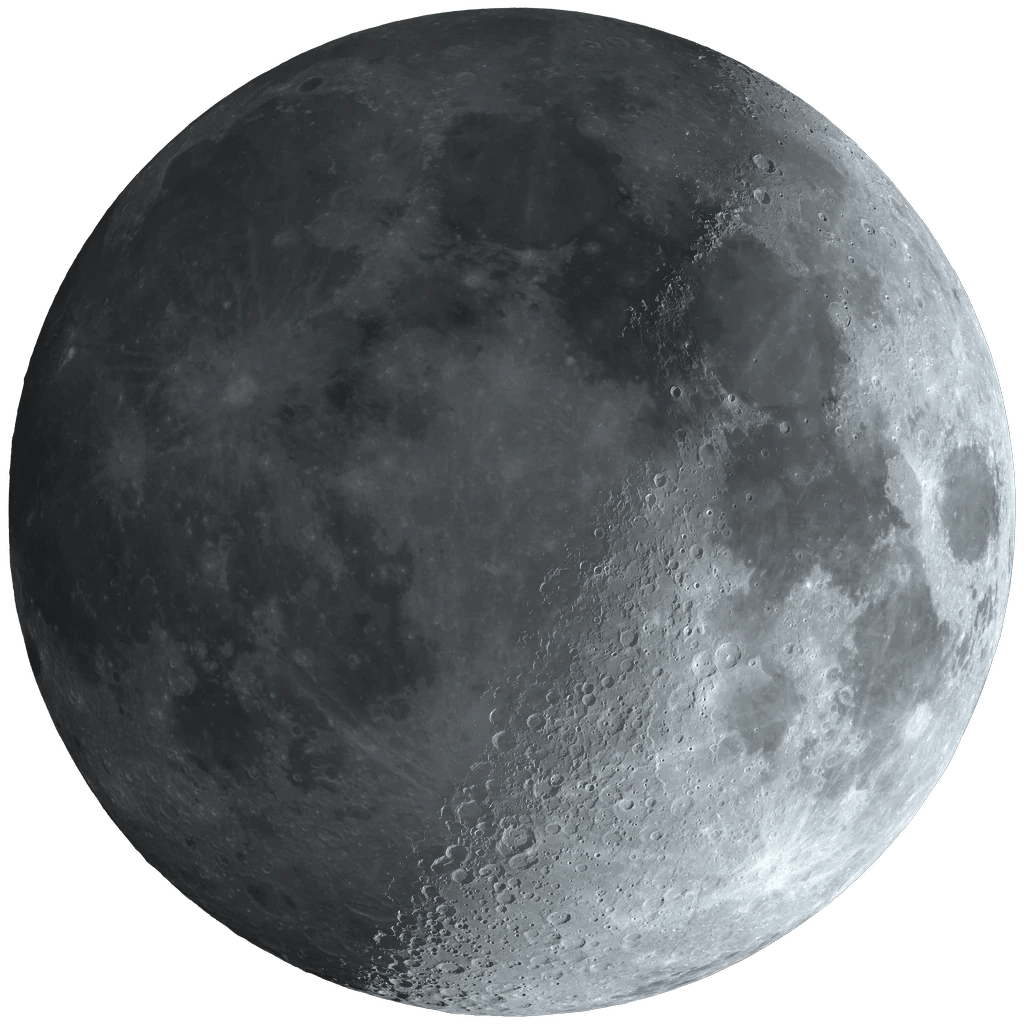
Waxing Gibbous. More than half but not yet full. The word "gibbous" comes from the Latin for "humpbacked," which describes the shape nicely. This is the moon at its most asymmetric, with a rounded bright side and a curved shadow eating into the left edge.
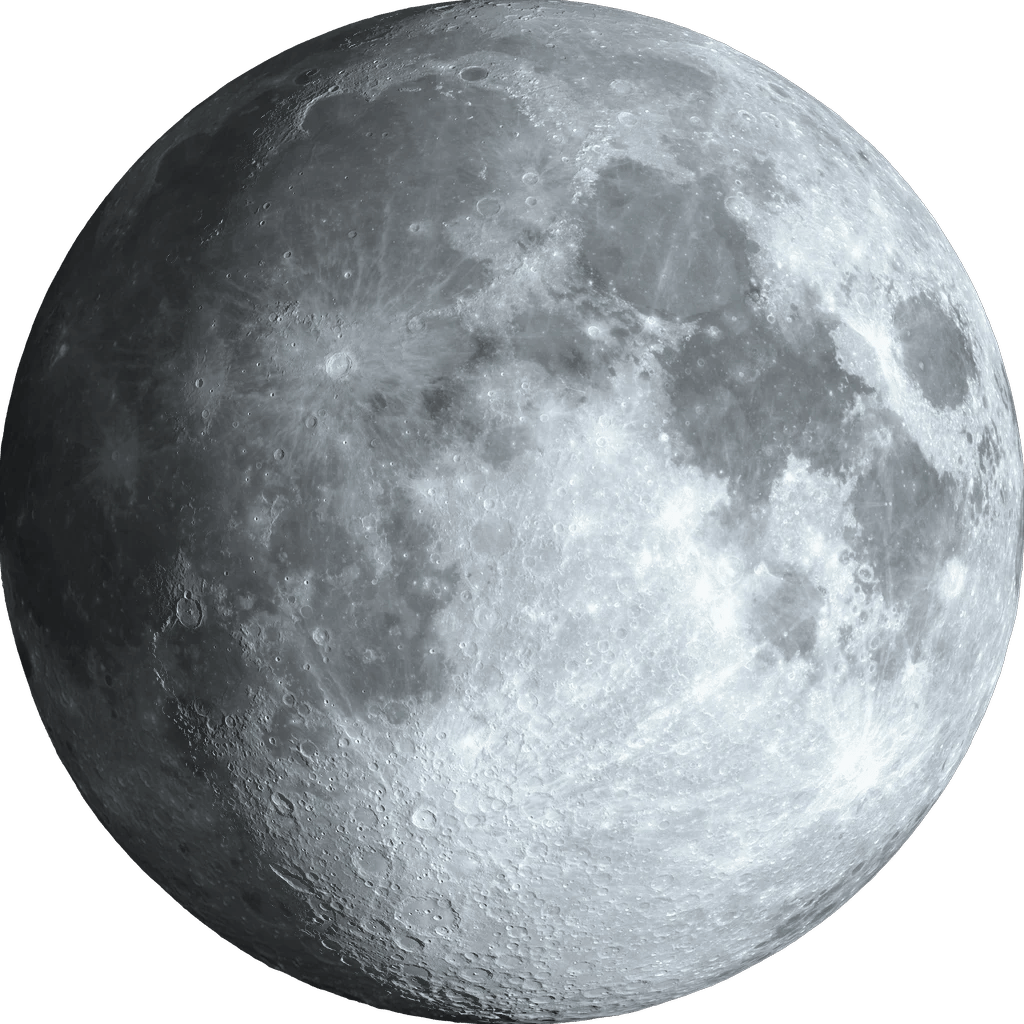
Full Moon. The entire visible face of the moon is illuminated. The Earth sits between the Sun and the Moon, and sunlight floods the lunar surface. Full moons rise at sunset and set at sunrise. If you were born on a full moon, your birthday moon was the most dramatic version: bright, round, and impossible to miss.
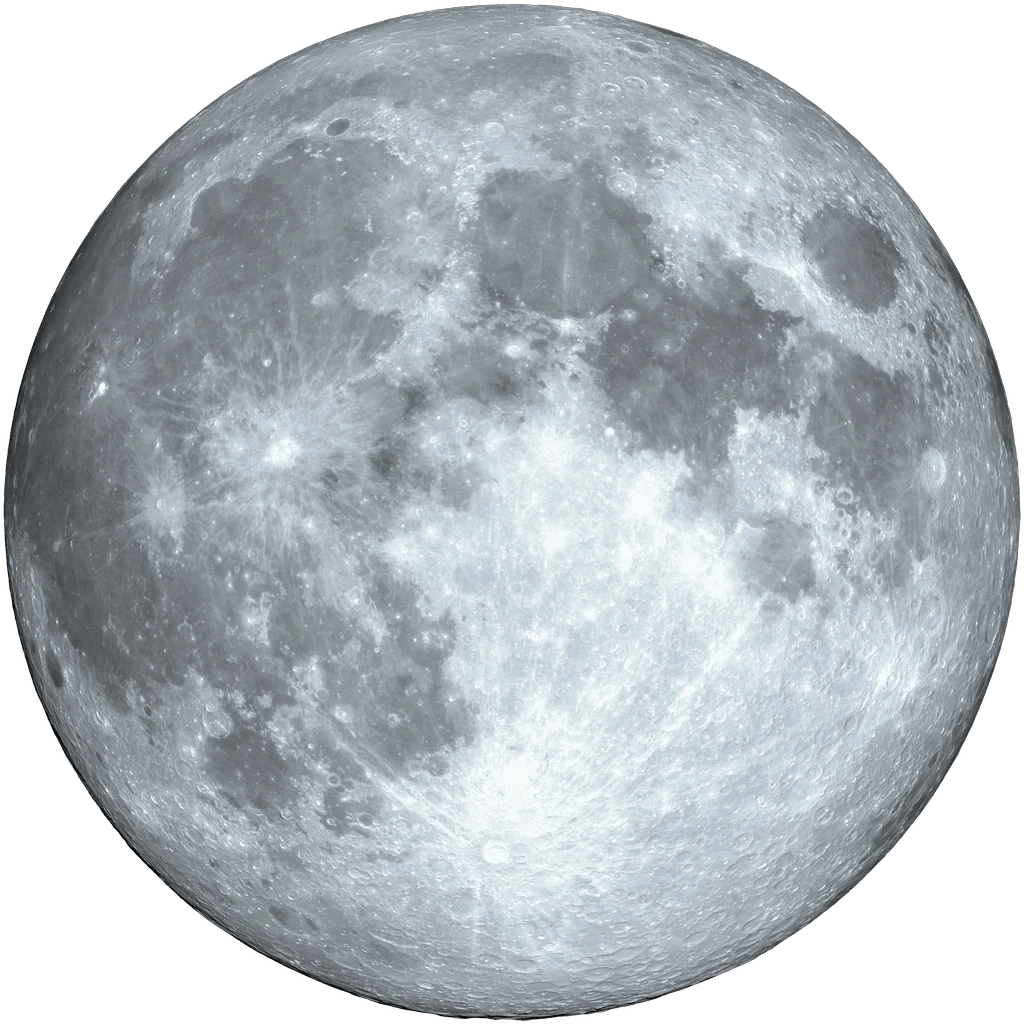
Waning Gibbous. The light begins to retreat. The left side of the moon is now the bright side (again, from a northern hemisphere perspective), and the shadow creeps in from the right. Still large, still bright, but unmistakably past its peak.
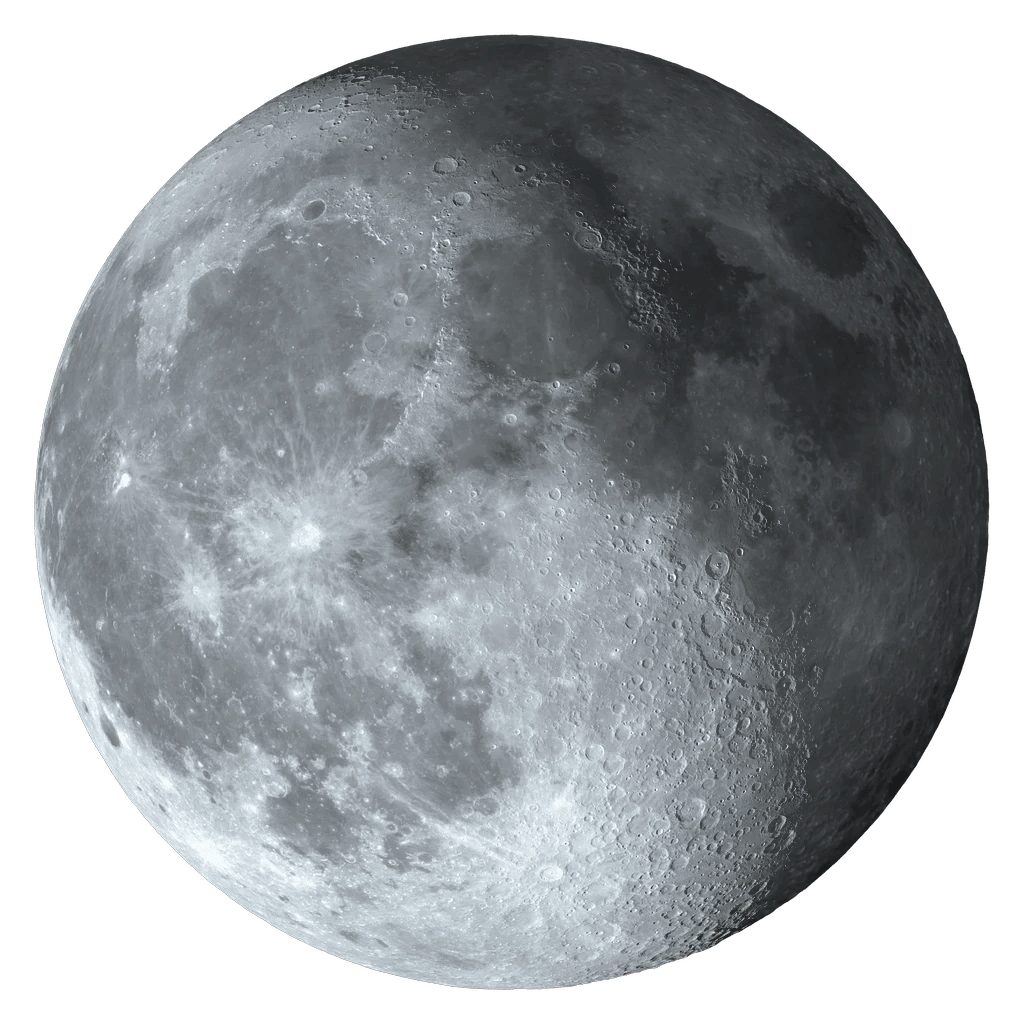
Third Quarter. The opposite half from the first quarter is now illuminated. The third quarter moon rises around midnight, which means it's most visible in the early morning sky. A less commonly seen phase, simply because fewer people are looking up at 3am.
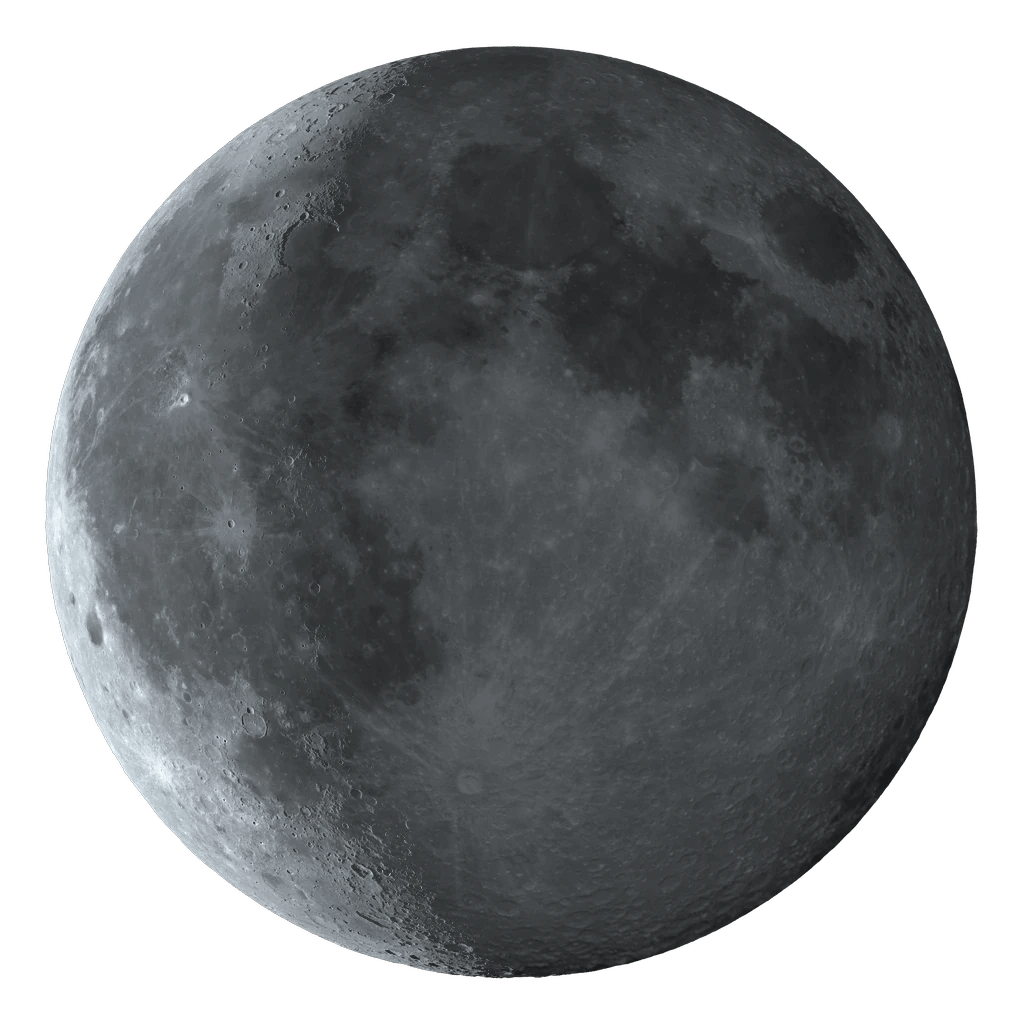
Waning Crescent. The last sliver before the cycle resets. A thin crescent on the left side, visible just before dawn in the eastern sky. Quiet, subtle, and fleeting.
Each phase lasts roughly 3.7 days, though the visual change is not evenly distributed. Near the full and new moon phases, the moon's appearance barely changes from one day to the next. Around the quarter phases, the terminator (the shadow line) sweeps rapidly across the disc, making each day look noticeably different. The reason is geometric: the illuminated fraction follows a cosine curve, which is flattest at its extremes and steepest in the middle.
Why Your Birthday Moon Looked Different Depending on Where You Were Born
Here's something most people don't realise: two people born on the same date, one in London and one in Buenos Aires, would have seen the same moon phase but a completely different moon in the sky. The crescent would have been tilted at a different angle. The "Man in the Moon" would have been facing a different direction. In the southern hemisphere, the whole image appears nearly inverted compared to the northern hemisphere view.
This happens because of something called the parallactic angle: the angle between the direction to the celestial north pole and the direction straight up from where you're standing, as measured at the moon's position in the sky. The further you are from the north pole, the more the moon's orientation rotates.
In practical terms, the effect is striking. From Dublin at 53 degrees north, a crescent moon leans modestly, about 28 degrees from vertical. From Cairo at 30 degrees north, the lean increases to around 50 degrees. At the equator, the crescent lies almost flat, like a bowl or a smile. This is sometimes called the "Cheshire Cat moon." And from Sydney at 34 degrees south, the entire image flips: the Man in the Moon appears to be standing on his head.
Most online moon phase calculators ignore this entirely. They show you the phase, the correct percentage of illumination, but from a generic top-down perspective that doesn't correspond to any real viewing location. If you were born in Melbourne or Sao Paulo or Cape Town, the moon on your birthday looked fundamentally different from the flat disc most tools will show you.
This is one of the reasons we built the moon phase print at The Night Sky to account for observer latitude. The print doesn't just show the right phase. It shows the right orientation, calculated using spherical trigonometry for your specific location.
The Science Behind Calculating Your Birthday Moon
Calculating the moon phase for a specific date is a well-established problem in positional astronomy, and the standard reference is Jean Meeus' Astronomical Algorithms, first published in 1991 and still the backbone of most astronomical software.
The core calculation works like this. For any date, you compute the positions of both the Sun and the Moon along the ecliptic (the plane of Earth's orbit). The Sun's position involves its mean longitude and a correction for Earth's elliptical orbit called the equation of centre, which accounts for the fact that Earth moves faster in January (near perihelion) and slower in July (near aphelion). This correction is about 1.9 degrees, enough to shift the moon phase by a noticeable amount.
The Moon's position is more complex because its orbit is perturbed by the Sun's gravity, the Earth's oblate shape, and its own eccentricity. A full lunar theory uses thousands of terms, but for phase calculation, six major perturbation terms capture the key effects: the Moon's own elliptical orbit (6.3 degrees), evection caused by the Sun's gravitational pull (1.3 degrees), variation from another solar perturbation (0.7 degrees), and three smaller corrections. Together, these give the Moon's position accurate to about one degree.
The phase is then simply the angular separation between the Sun and Moon (called the elongation), normalised to a 0 to 360 degree range. Zero degrees equals new moon. 180 degrees equals full moon. Everything in between maps to the familiar crescent, quarter, and gibbous shapes.
For the orientation calculation, you need one additional step: converting the Moon's ecliptic coordinates to equatorial coordinates (right ascension and declination), then computing the parallactic angle using the observer's latitude and the Moon's hour angle. The formula involves spherical trigonometry, but the result is intuitive. It tells you how many degrees the moon's "north" is rotated away from your local "up," which determines how tilted the crescent appears.
The images themselves are derived from NASA's Lunar Reconnaissance Orbiter data, which provides high-resolution imagery of the lunar surface. This means the prints show real topographic detail: the maria (the dark "seas"), the craters, the highlands. Not an artist's impression, but the actual surface of the moon.
What Your Moon Phase Says About You (and What It Doesn't)
There's a rich tradition of associating moon phases with personality traits. In some astrological systems, people born under a new moon are said to be introspective and drawn to new beginnings, while those born under a full moon are considered more outgoing and emotionally expressive. Waxing phases are linked to growth and ambition; waning phases to reflection and release.
Whether you find meaning in these associations is entirely personal. From an astronomical perspective, the moon phase on your birthday is a matter of orbital mechanics: the relative positions of the Sun, Moon, and Earth on a specific date. It has no causal influence on personality or fate. But that doesn't make it uninteresting. The moon phase from your birthday is a real, physical fact about the night you were born. It's a detail that connects your arrival to the wider universe in a tangible way, regardless of whether you read anything symbolic into it.
What we find is that most people are simply curious. They want to see it. They want to know whether they were born under a dramatic full moon or a barely-there crescent, and there's something satisfying about seeing that specific detail rendered accurately for the first time.
Turning Your Birthday Moon Into Something You Can Keep
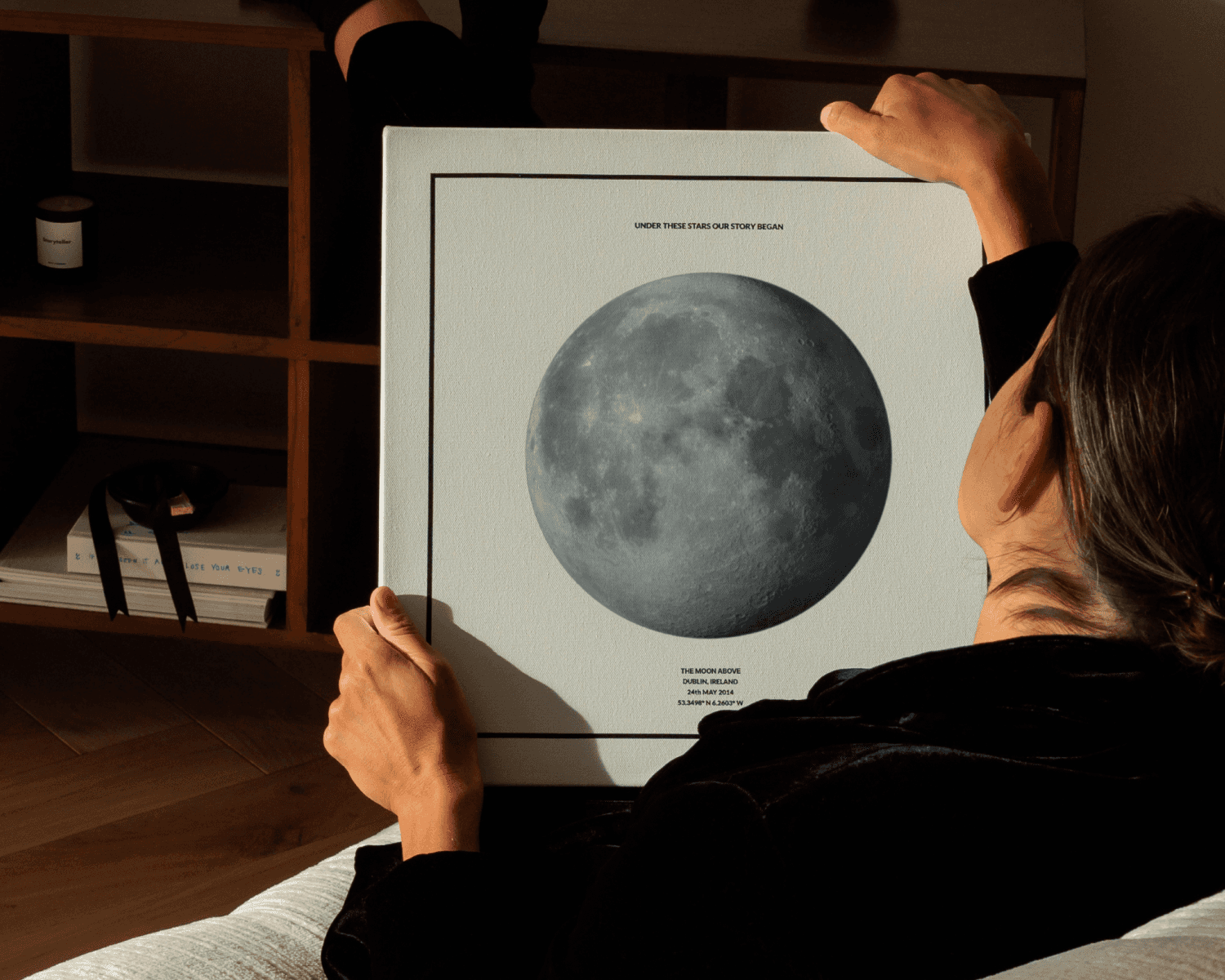
Once you know what the moon looked like on your birthday, the natural next step is wanting to capture it. A personalised moon phase print from The Night Sky takes your date and birth location and produces an astronomically accurate rendering of your birthday moon on museum-grade Hahnemuhle 200gsm paper with archival inks rated for 100+ years.
Unlike generic moon phase art, the print is specific to you in two ways: the phase (the exact illumination percentage from your date) and the orientation (the tilt as seen from your latitude). You can add a personal message beneath the moon, your name, your date, a line that means something to you.
It also makes a meaningful gift. A birthday moon print for a new baby captures the sky on the night they arrived. For a milestone birthday, it's a detail nobody else would think to give. For someone who loves astronomy or simply appreciates a gift with genuine thought behind it, it's the kind of present that stays on the wall for years.
"Got this for my son's 21st birthday as he is studying astrophysics so I knew he would appreciate it. He was over the moon with it." - L-Bo, Trustpilot
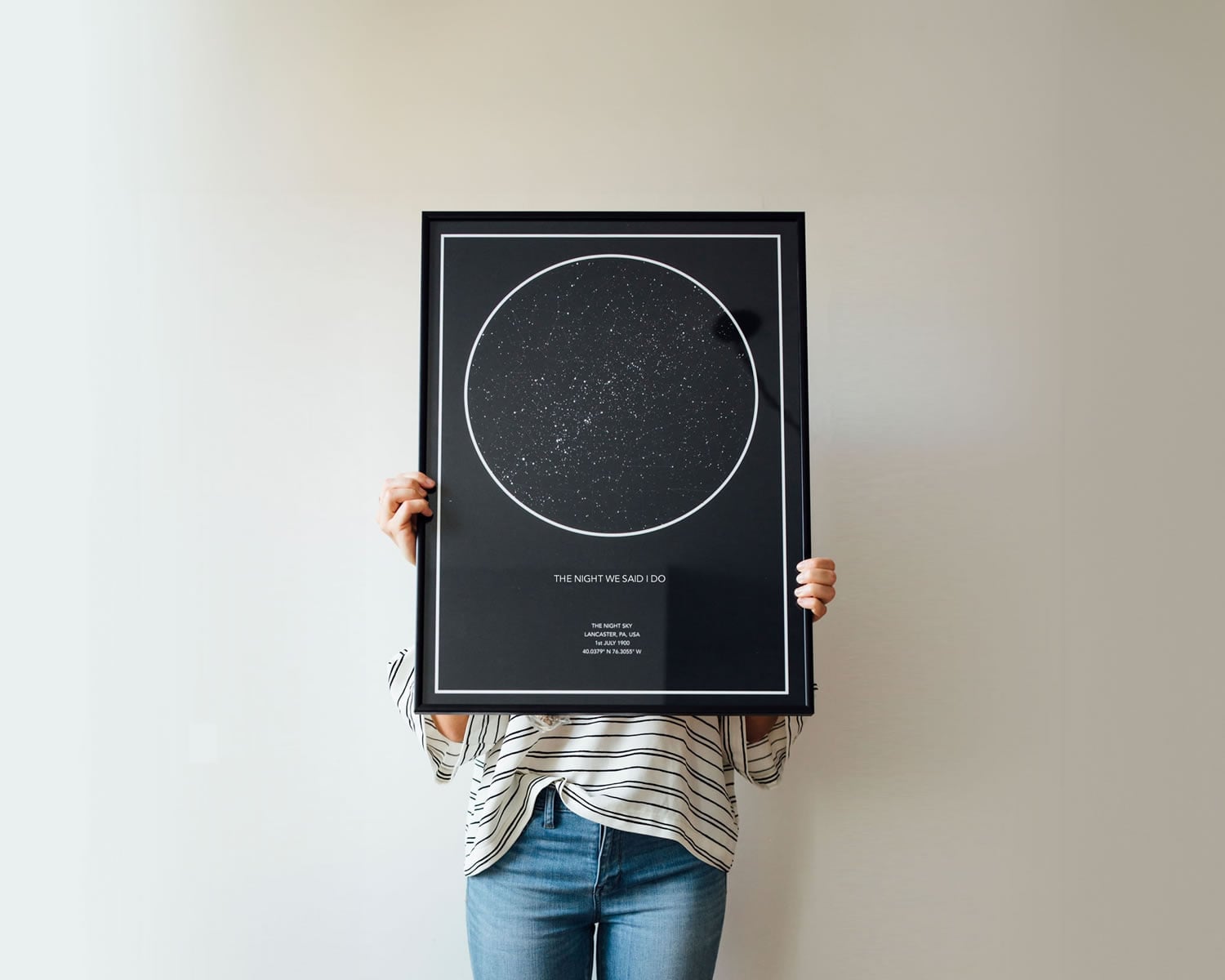
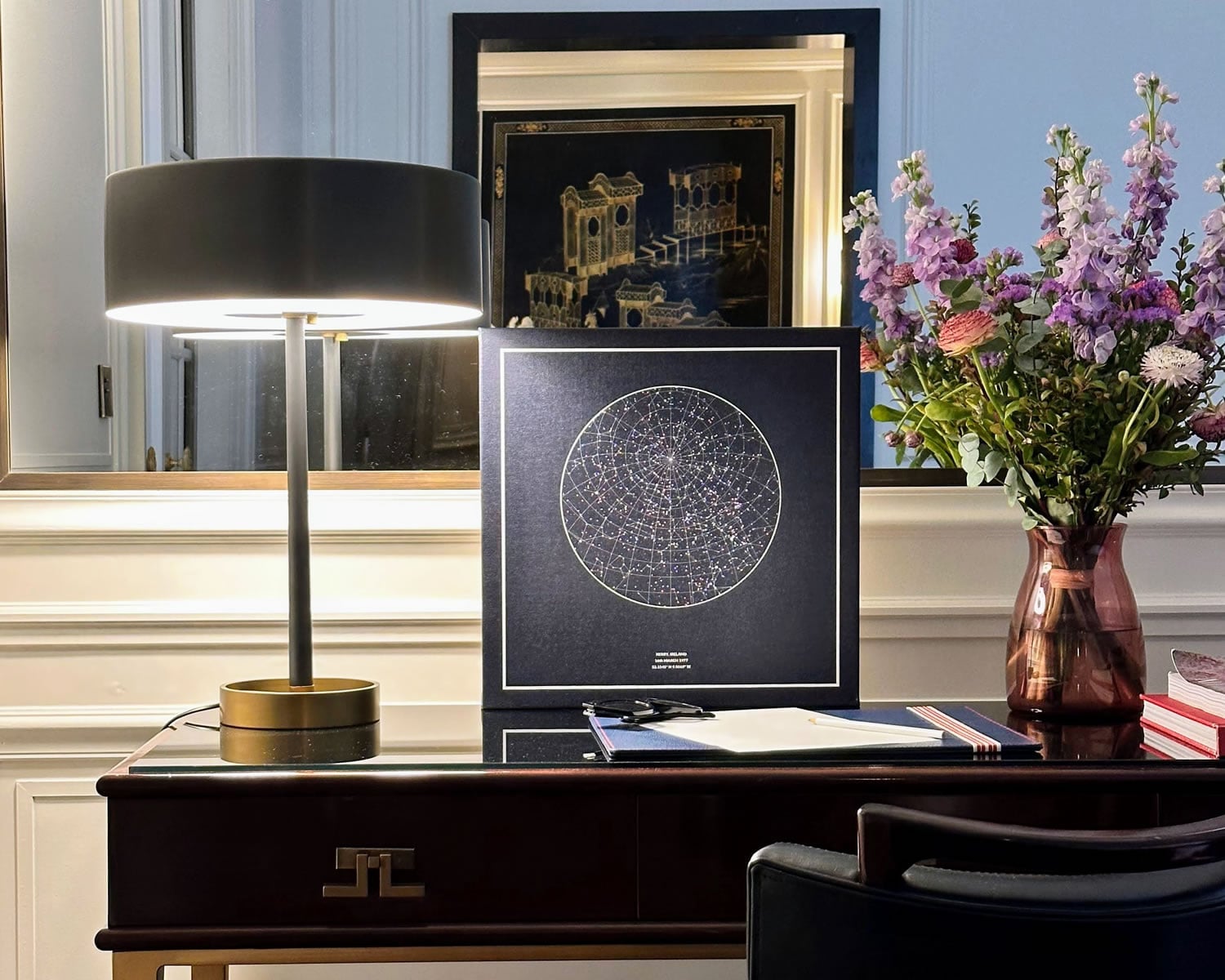
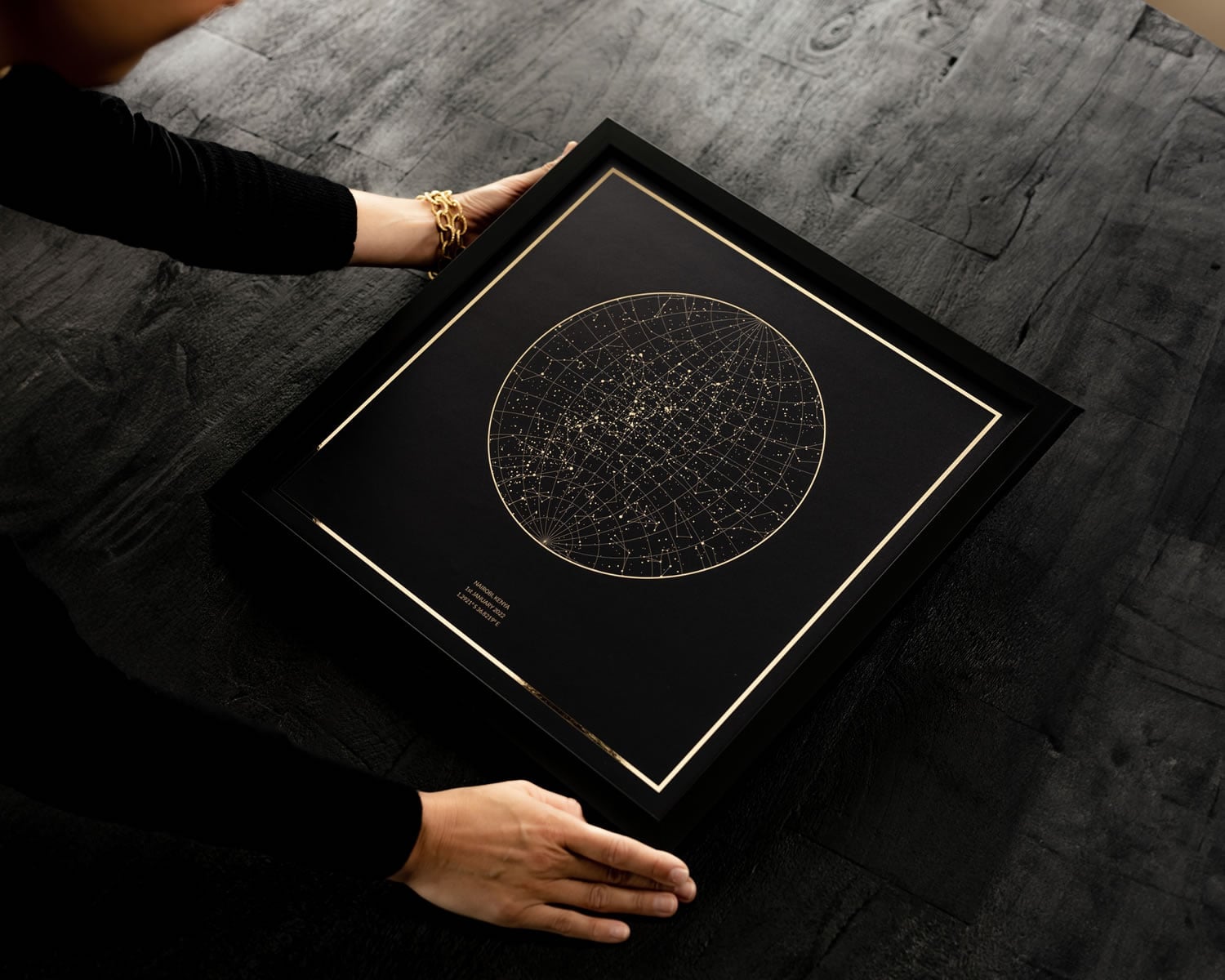
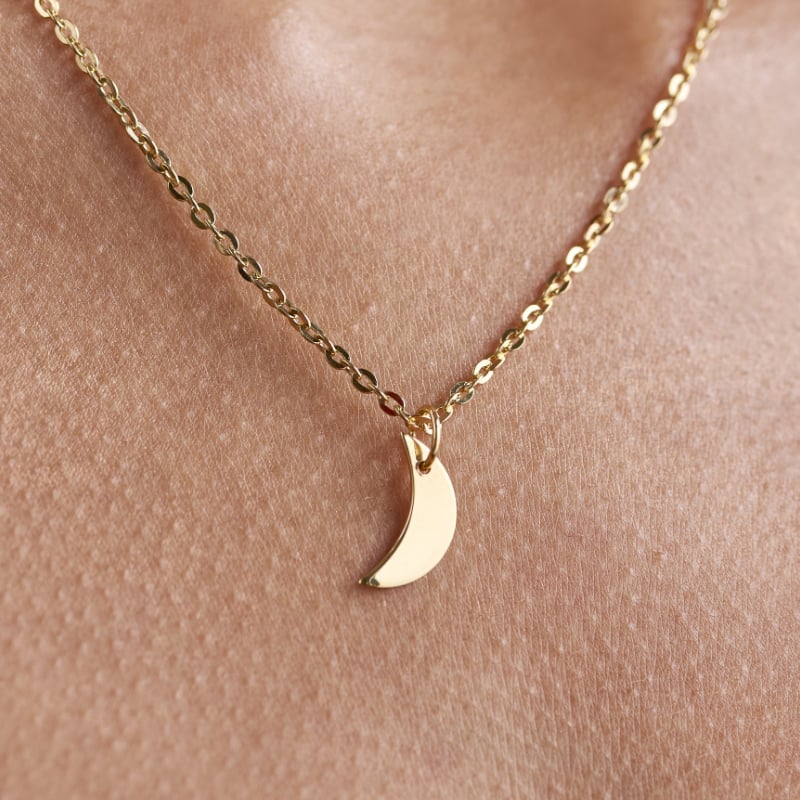
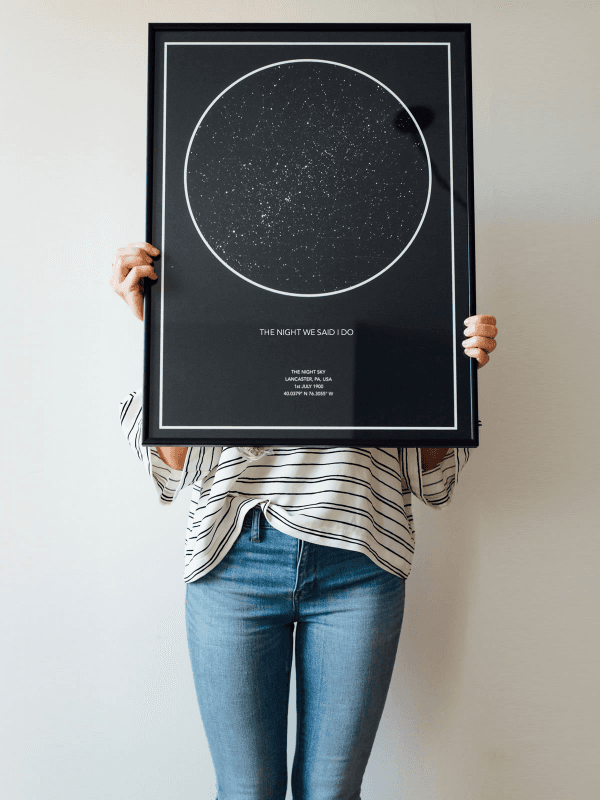
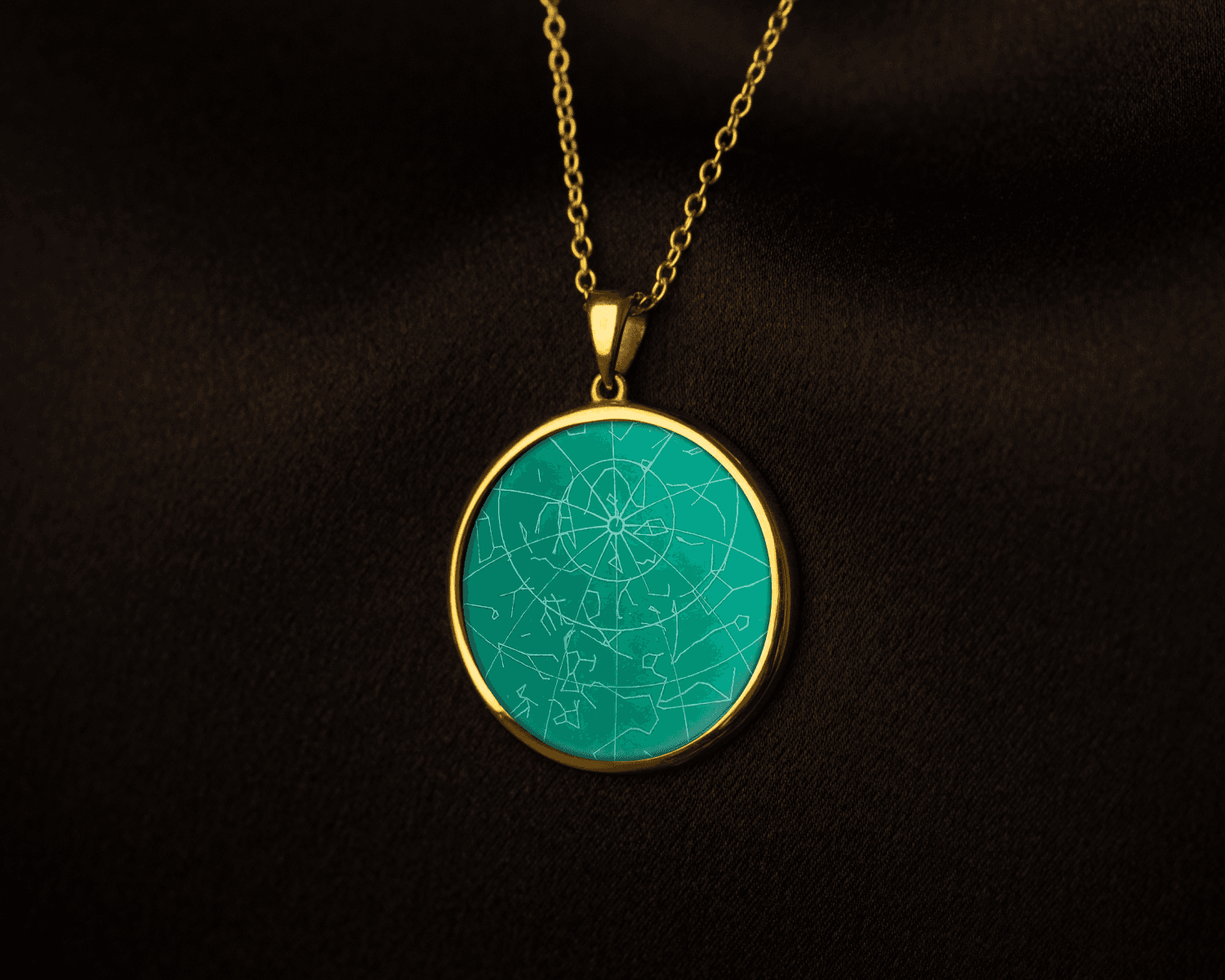
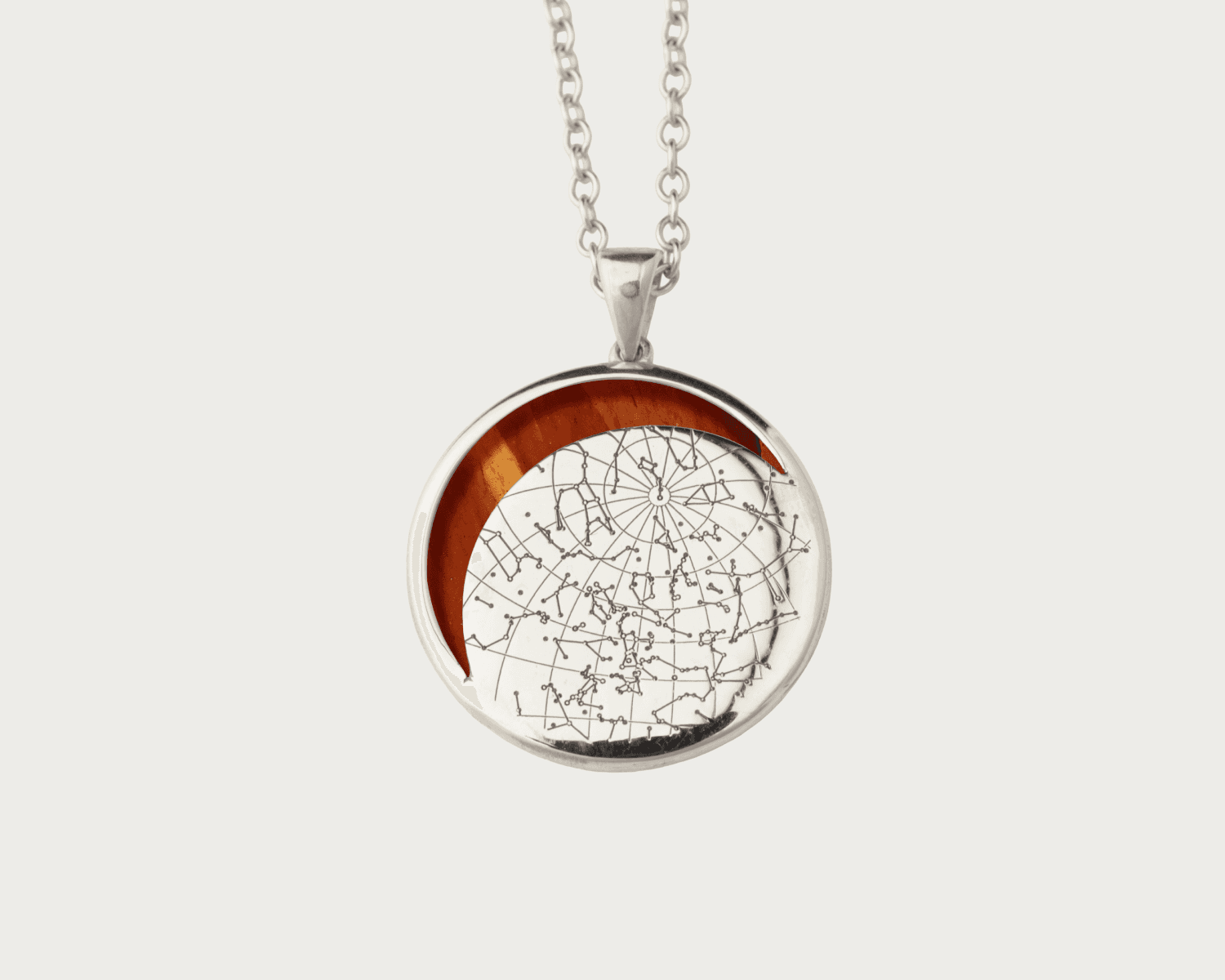
You can also pair a moon phase print with a star map poster of the same date: the full night sky above, the moon below, two perspectives on the same moment. Or choose a moon phase necklace for something wearable: the exact lunar phase from your date engraved into sterling silver or 18k gold vermeil.
"My husband and I met under the full moon on the river. He calls it the best night of his life. This was his favourite Christmas gift!" - Trustpilot Review
Frequently Asked Questions
How do I find out what the moon looked like on my birthday?
Enter your date and birth location into a moon phase calculator. For a basic phase lookup, NASA's Dial-a-Moon or timeanddate.com will show you the illumination percentage. For a fully accurate rendering that includes the correct orientation for your birth location, The Night Sky's moon phase print tool calculates both the phase and the parallactic angle for your latitude.
Does the moon look different depending on where you are in the world?
Yes. The phase (how much is illuminated) is the same globally at any given moment, but the orientation changes with latitude. A crescent moon in the northern hemisphere leans one way, lies flat at the equator, and appears nearly inverted in the southern hemisphere. This is caused by the parallactic angle, the angular difference between celestial north and your local zenith.
What is the most common moon phase to be born under?
All eight phases are roughly equally likely, since each phase lasts about 3.7 days out of the 29.5-day cycle. In practice, the waxing and waning crescent and gibbous phases each cover a slightly wider arc than the quarters and full/new phases, so crescent and gibbous birthdays are marginally more common. But the difference is small enough that no phase is truly rare.
Can two people born on the same day have different birthday moons?
They will have the same phase (the moon phase changes slowly enough that one calendar day rarely spans two distinct phases), but the orientation will differ based on their birth location. Someone born in Stockholm and someone born in Sydney on the same day would see the same percentage of illumination but a very different tilt and visual appearance.
Is a moon phase print a good birthday gift?
It's one of the most personal gifts you can give. Everyone has a birthday moon, and almost nobody has ever seen what theirs actually looked like. A personalised moon phase print turns that detail into something tangible: a museum-grade art print specific to their date and birth location, with room for a custom message. Popular for milestone birthdays, new baby gifts, and anyone who appreciates a gift with real thought behind it.
By the numbers
- The Moon completes a cycle every 29.5 days; each of its eight phases lasts about 3.7 days.
- Star positions come from the ESA Hipparcos catalog; the map shows stars, constellation lines and the Moon.
- Prints are on Prodigi Enhanced Matte Art paper, 200gsm, with archival pigment inks and a 100+ year colour guarantee.
- Founded in January 2017 in Dublin; two granted US patents.
- 42,002 reviews; 600,000+ social media followers.
- Free standard shipping; US prints arrive in 5-7 business days, UK in 4-5; a digital download is also available.