How to Read Your Star Chart: A Beginner's Guide
How to Read Your Star Chart: A Beginner's Guide
We know the questions you’re asking… What is a star chart? What are star maps otherwise called? What does a star map show? Are star maps accurate? And we know you want to discover how to read your star chart. But don’t worry, we have you covered. This blog will help you understand star maps, how to read them, how to create your own and more!

What is a Star Map? More Than Just a Pretty Picture
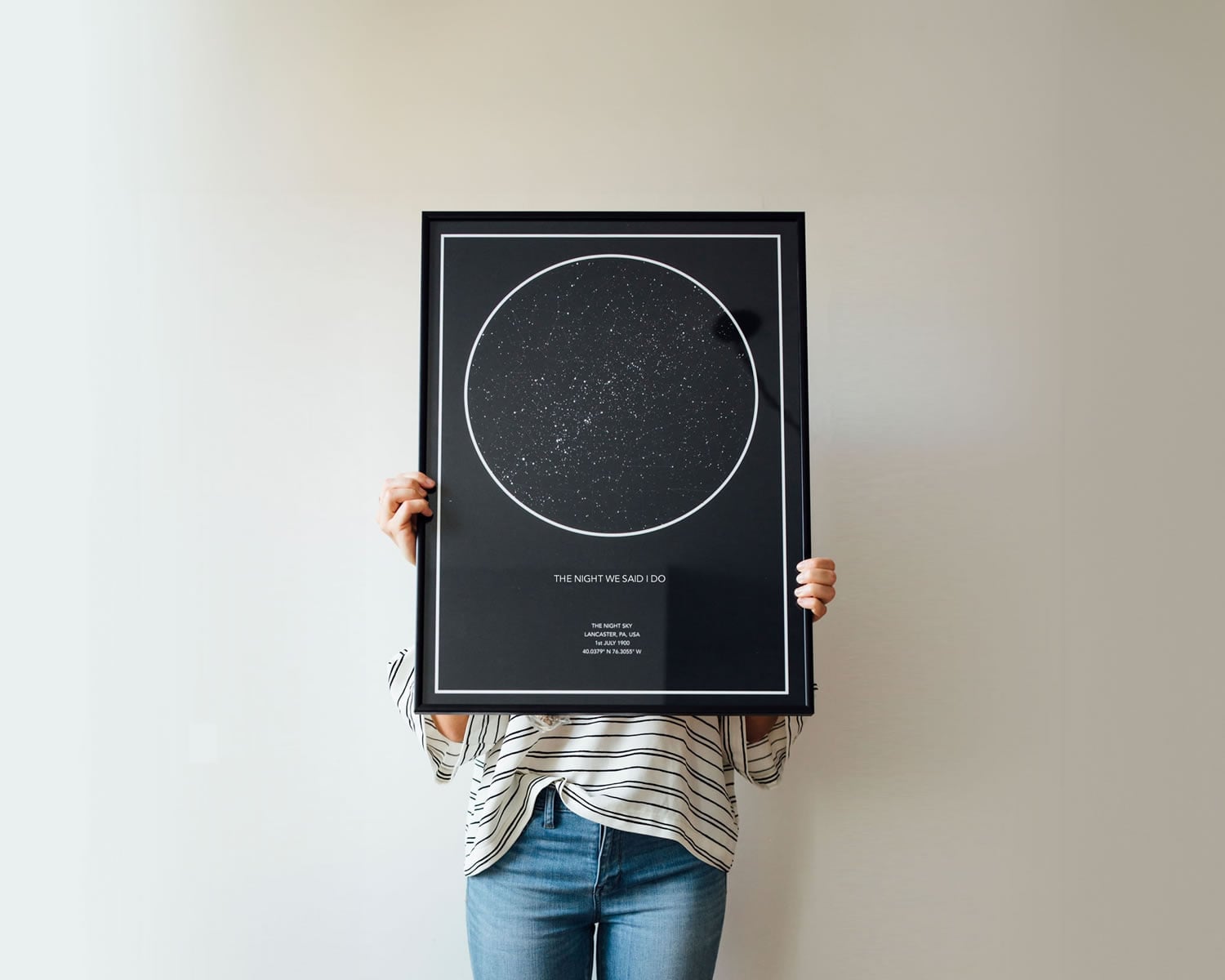
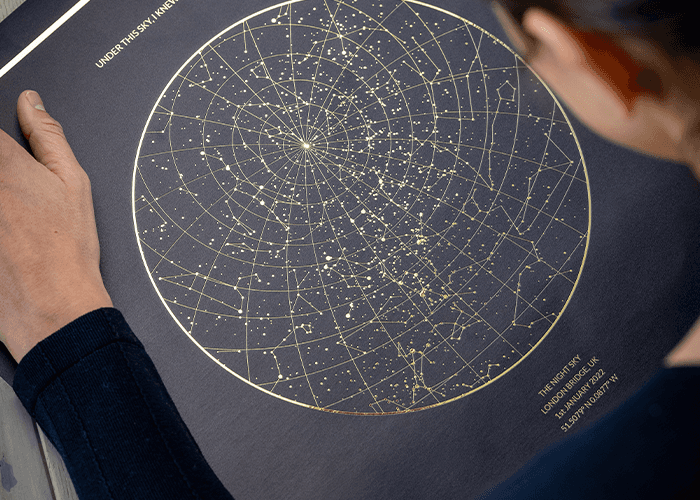
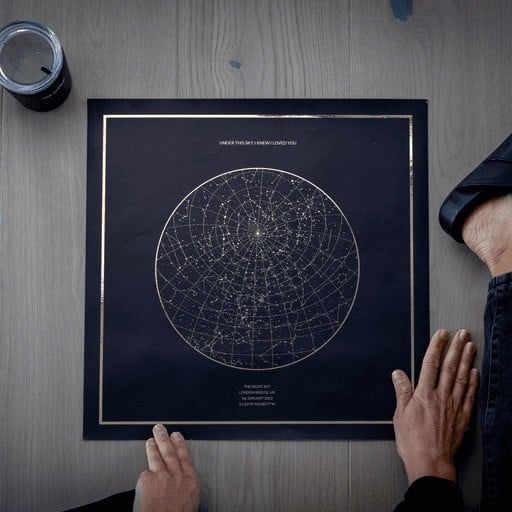
A star map, (or star chart) is a beautiful depiction of the night sky, outlining the position of our stars and constellations. They allow us to gaze into the night sky, even during the day and capture a moment in time (and space). There are different types of star maps, each with different uses. Primarily, they focus on the position of stars on a specific date and location. This allows star map prints to be easily personalized and be an important piece for you and your loved ones.
The Key Elements of Your Star Chart
The Celestial Sphere
Star maps present the Celestial Sphere and therefore objects in space as viewed from earth. A grid layout offers us an opportunity to identify stars and constellations in a 2D format.
Constellations
Constellations are a key part of a star map. They are the patterns of the stars, often depicting an animal or an object, and also represent zodiac signs. There are 88 official constellations, which are extremely useful when navigating the sky and other stars.
The Ecliptic Line
The Ecliptic Line is the path of the sun, as seen from earth. It is considered the ‘fundamental plane’, due to planets in our solar system generally following this line as they orbit the sun.
Planets
Planets can show up on star maps depending on the date of the star map.
Your Step-by-Step Guide to Reading Your Star Map
Learning how to read your star chart is important in order to fully understand its meaning. This quick, step-by-step guide will help you ensure you are able to read it and appreciate it. It will also allow you to transfer these skills to the real night sky and aid you in your stargazing adventures.
Step 1: Orient Yourself
Placing your map using the correct navigation makes it more accurate when reading it. Use a compass or your phone to find north, then hang your star map in this direction. This means that when you use it to locate objects, they will be in the same location and direction from each other when you look up into the sky.
Step 2: Start with the Big Picture
The first thing to look for when navigating your star map is the major constellations. These include Orion and Ursa Major, more commonly known as The Big Dipper. This will help you find a starting point and ease your ability to find more intricate or smaller features. You can also apply this technique when looking at the sky at night and discovering the actual stars and constellations.
Step 3: Trace the Ecliptic
The next step is to find the Ecliptic Line. You can identify this by finding the dotted line across your star map, which represents the ecliptic line and the sun's orbit.
Step 4: Look for Planets
The Ecliptic Line can also be used to locate planets. This is because planets orbit the sun and therefore follow its path. If planets were visible on the date of your personalized star map, you will be able to locate them by the fact that they are bigger and brighter than stars, and are not part of constellations.
Step 5: Dive Deeper
Once you are familiar with these larger and easier to locate features, you can begin to search for smaller, intricate constellations. This will enhance your knowledge of not only your personal star map but also the night sky around you. The more you search for, the more you will find, making it seem like a constantly evolving star map of your special moment.
Putting It All Together: Reading the Story of Your Night Sky
Using all of these techniques allows you to understand your star map or star chart and be aware of what celestial objects were above you on your special date. This can add meaning to both the date and certain constellations/ features of your star map.
Creating Your Own Custom Star Chart with The Night Sky
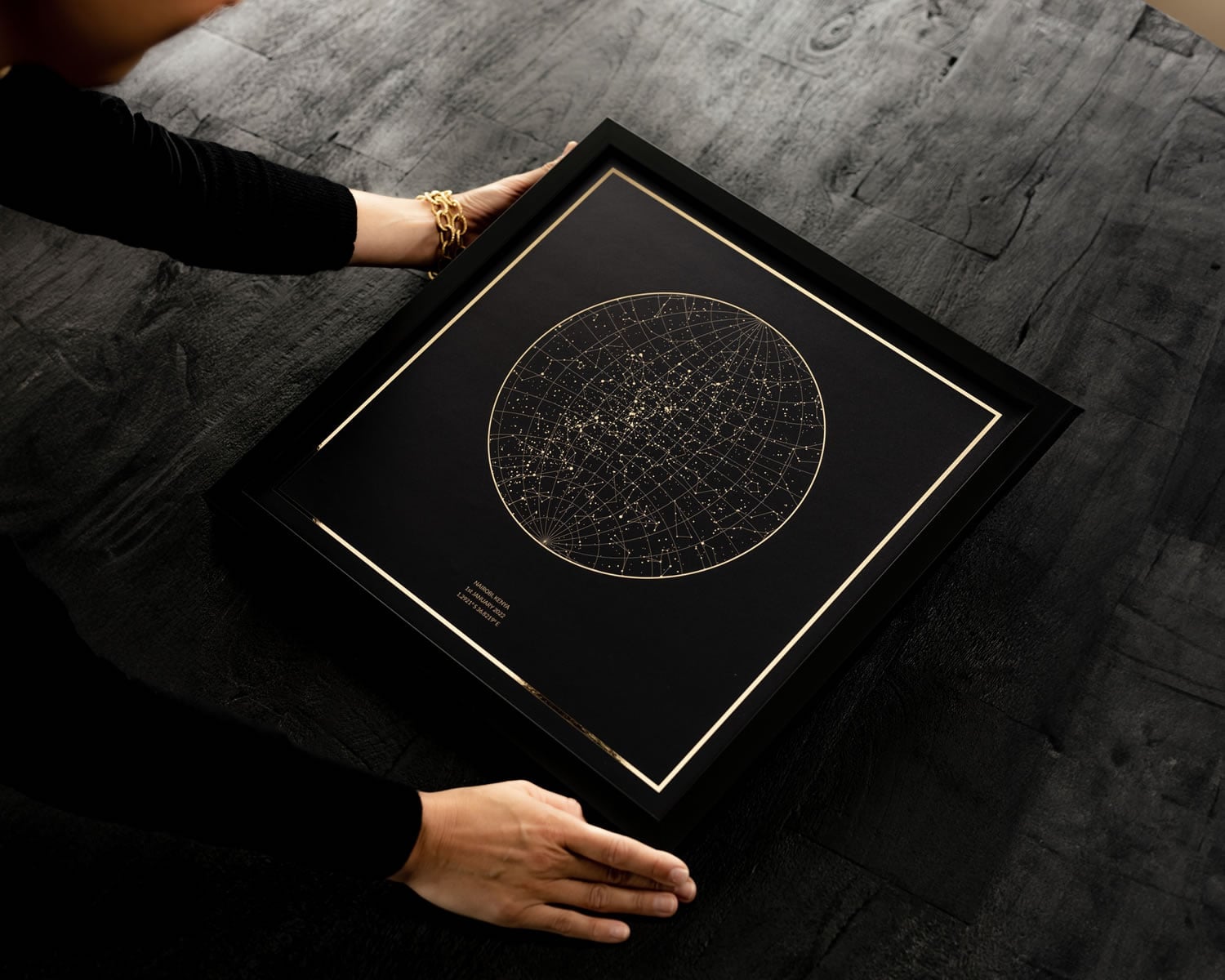
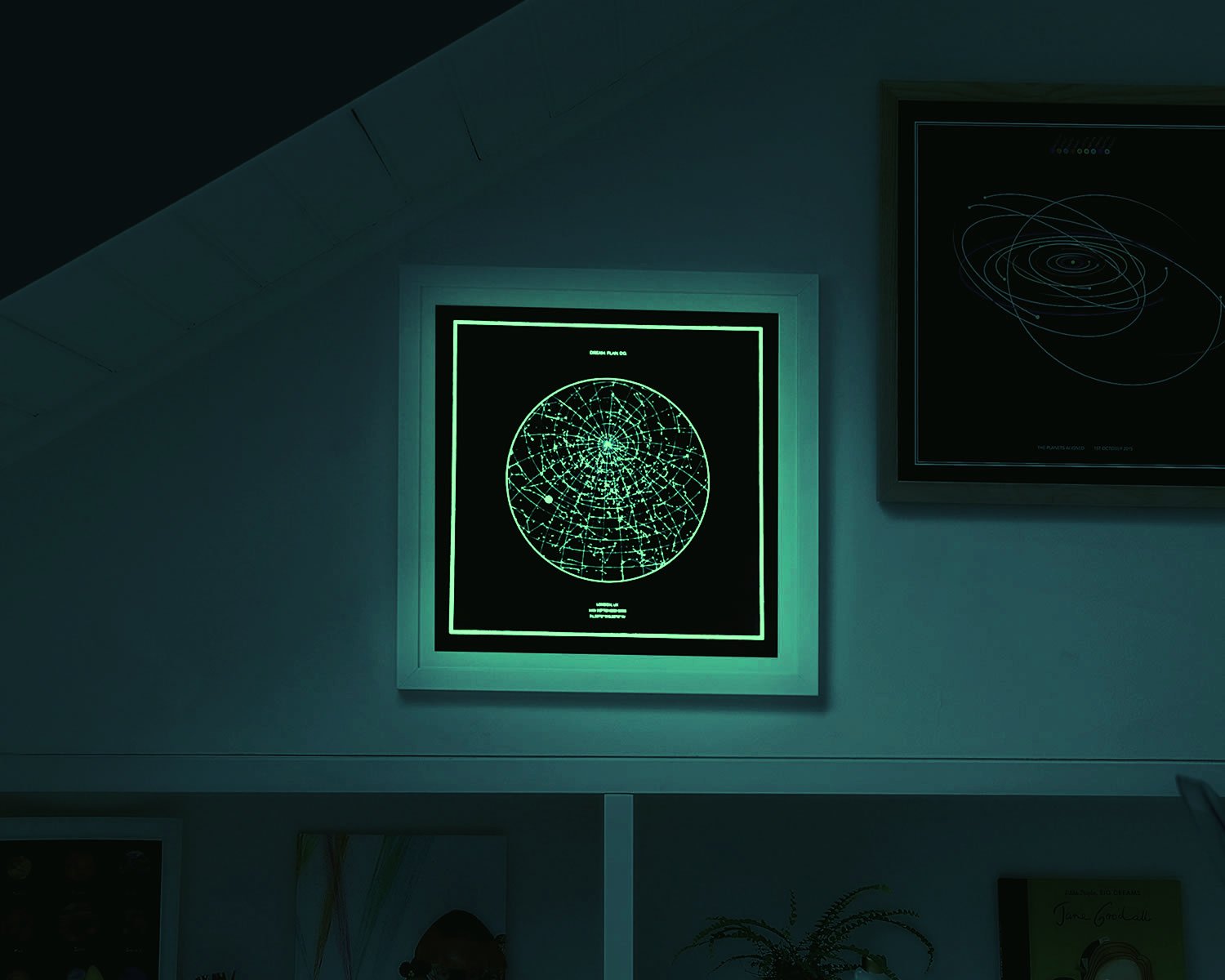
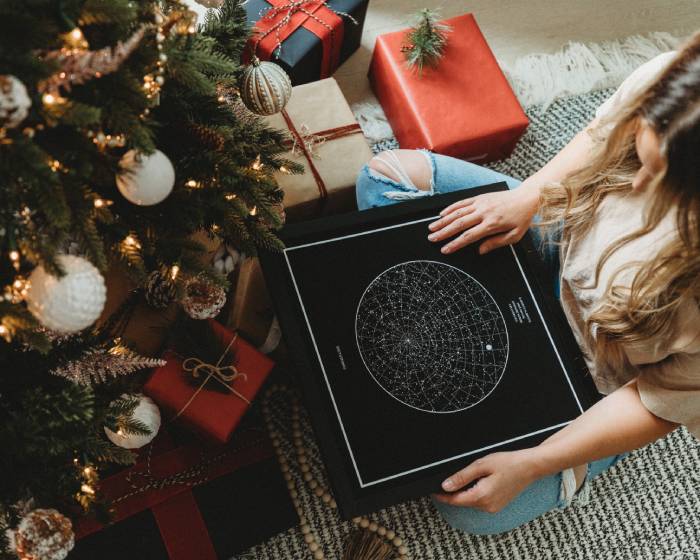
The Night Sky star maps are a beautiful way to commemorate a special date in your life. Whether it be a birthday, anniversary, special occasion, or anything else, these unique prints are a constant reminder of it. Choose between classic constellation prints, personalized metallic star maps, sky canvases, or even glow-in-the-dark star maps for that even more personal and exciting touch. You can also choose between colors, so it matches your space and your energy perfectly.
Frequently Asked Questions About Star Charts
What is a star map?
A star map is a representation of the night sky on a specific date. It allows you to point out stars, constellations, the ecliptic line, and planets. These are all in the place they were on your chosen night. This acts as a constant and beautiful reminder of your special occasion.
How accurate are the star maps?
Star maps are very accurate. They depict the position of celestial objects using technology and algorithmic programmes to calculate this to ensure the precision of these objects.
What types of star map jewelry does The Night Sky offer?
As well as star map prints, The Night Sky also offers star map necklaces, bracelets, and star map lockets. Our range of products allows you to choose a style and jewelry piece that suits you.