Lapis Lazuli Meaning & Properties
Introduction
Hold a piece of lapis lazuli up to the light and you will see something extraordinary: a deep, saturated blue scattered with tiny golden flecks of pyrite, like stars suspended in a midnight sky. It is one of the most visually striking stones on earth, and one of the oldest in human use.
Lapis lazuli is not technically a single mineral. It is a metamorphic rock, composed primarily of lazurite (which gives it that intense blue), along with calcite, pyrite, and other trace minerals. The pyrite inclusions are what create those shimmering golden specks, and the finest specimens come from the same mines in Afghanistan's Badakhshan province that have been worked for over 6,500 years.
People are drawn to lapis lazuli for the same reasons they always have been: its colour is deep, confident, and unmistakably beautiful. It looks like the night sky captured in stone. Below, we explore lapis lazuli meaning, its healing properties, its rich ancient history, and how to wear and care for it.
Lapis Lazuli Meaning & Symbolism
Lapis lazuli is the stone of wisdom, truth, and inner vision. Where some crystals carry a single emotional note, lapis lazuli resonates across several registers at once. It is a stone of intellectual clarity, creative expression, and honest self-awareness. Its meaning has remained remarkably consistent across thousands of years and dozens of cultures: this is a stone that helps you see clearly, speak truthfully, and trust your own intuition.
Lapis lazuli is strongly connected to the third eye chakra, the energy centre associated with intuition, perception, and deeper knowing. When this chakra is balanced, you feel mentally sharp, creatively open, and confident in your decisions. Many practitioners also link lapis lazuli to the throat chakra, tying it to honest communication and the courage to speak your truth.
The symbolism of lapis lazuli runs deep. In ancient Egypt, it was associated with the night sky and the realm of the gods. The Egyptians believed that lapis lazuli carried the soul of the divine, and they used it in everything from royal jewellery to the death masks of pharaohs. The golden pyrite flecks within the stone were seen as reflections of the stars, reinforcing its connection to the heavens.
In many traditions, lapis lazuli also represents protection. It was carried as a talisman against negative energy, psychic attack, and dishonesty. Wearing it was believed to reveal the truth in any situation and to guard the wearer from harm. That combination of wisdom, protection, and celestial beauty is what gives lapis lazuli its enduring power.
Lapis Lazuli Healing Properties
Crystal healing is a complementary practice, not a substitute for medical advice. That said, lapis lazuli is one of the most widely valued healing stones, and practitioners have worked with it for millennia. Here is what crystal healing traditions associate with the stone.
Physical Healing Properties
Lapis lazuli is traditionally linked to the throat and upper body. Practitioners believe it can support the immune system, ease inflammation, and soothe headaches and migraines. It is also associated with healthy sleep patterns, with some traditions suggesting that placing lapis lazuli beneath your pillow can help combat insomnia. Because of its connection to the throat chakra, it is sometimes used to support the thyroid and vocal cords.
Emotional Healing Properties
Lapis lazuli is considered a powerful stone for emotional balance and self-expression. If you struggle to communicate your feelings, or if you tend to suppress what you truly think, lapis lazuli encourages honest emotional release. It is a stone of self-awareness, helping you confront difficult truths about yourself with compassion rather than judgement. Many people turn to lapis lazuli during periods of stress or uncertainty, finding that it brings a sense of calm confidence and mental clarity.
Spiritual Healing Properties
Spiritually, lapis lazuli is deeply tied to the third eye chakra and to the pursuit of higher knowledge. Meditating with it is said to enhance intuition, sharpen psychic awareness, and open pathways to spiritual insight. It is considered a stone of enlightenment, one that encourages you to look beyond the surface of things and connect with a deeper understanding of yourself and the world. Many practitioners use lapis lazuli to deepen their meditation practice or to access creative inspiration from a place of inner stillness.
History of Lapis Lazuli
Few gemstones can claim a history as rich and far-reaching as lapis lazuli. It has been mined, traded, revered, and worn for at least 6,500 years, making it one of the oldest ornamental stones in continuous human use.
The earliest known source is the Sar-i Sang mines in the Badakhshan province of Afghanistan, and remarkably, these same mines are still producing lapis lazuli today. From there, ancient trade routes carried the stone across the known world. It reached the Indus Valley civilisation, Mesopotamia, and eventually Egypt, where it became one of the most prized materials in the ancient world.
The ancient Egyptians used lapis lazuli extensively. Cleopatra is said to have ground it into powder for eyeshadow. It was carved into scarabs, inlaid into the golden death mask of Tutankhamun, and placed in tombs to accompany the dead into the afterlife. The Egyptians called it "the stone of the heavens" and associated its deep blue colour with the night sky, the gods, and the journey of the soul.
The name itself reflects this cross-cultural reverence. "Lapis" comes from the Latin word for stone, while "lazuli" derives from the Persian "lazhuward," meaning blue or heaven. Quite literally, lapis lazuli means "the heavenly stone."
During the Renaissance, lapis lazuli found a second life as the source of ultramarine, the most expensive and sought-after pigment in European painting. Artists including Michelangelo and Vermeer ground lapis lazuli into a fine powder to create that luminous, otherworldly blue. Vermeer's famous "Girl with a Pearl Earring" and the ceiling of the Sistine Chapel both owe their blues to this ancient stone. The pigment was so costly that it was reserved for the most sacred subjects, particularly the robes of the Virgin Mary.
How to Use Lapis Lazuli
The most natural way to work with lapis lazuli is to wear it. A pendant or necklace that sits near the throat keeps the stone aligned with both the throat chakra and the third eye, making it ideal for enhancing communication and intuition throughout the day. There is something especially fitting about wearing lapis lazuli close to you. Its deep blue, flecked with gold, catches the light in a way that draws quiet attention without demanding it.
For meditation, hold a lapis lazuli stone against your forehead or rest it on your third eye point while lying down. Focus on clarity, truth, or creative insight, and allow the stone's energy to guide your practice.
Placing lapis lazuli on your desk or in your workspace is a popular choice for anyone in a creative or intellectual field. Writers, artists, and thinkers have been drawn to this stone for centuries, and keeping it nearby is said to encourage focus, original thinking, and honest self-expression.
Lapis lazuli pairs beautifully with other crystals. Combine it with rose quartz for balancing wisdom with love, with tiger's eye for combining intuition with confidence, or with black onyx for enhanced protection and grounding.
How to Care for Lapis Lazuli Jewelry
Lapis lazuli sits at 5 to 5.5 on the Mohs hardness scale, which makes it softer than many popular gemstones. It is beautiful and durable enough for regular wear, but it does deserve a little extra care.
Cleaning: Use lukewarm water, a soft cloth, and a drop of mild soap. Gently wipe the stone clean and dry it thoroughly. Never use ultrasonic cleaners, steam cleaners, or chemical solutions, as these can damage the surface and dull the colour.
Storage: Store lapis lazuli jewellery separately from harder stones like diamonds, sapphires, or quartz, which can scratch its surface. A soft pouch or a lined compartment in your jewellery box is ideal.
Avoid: Keep lapis lazuli away from harsh chemicals, including perfume, hairspray, and household cleaners. Remove it before swimming or bathing. Put your lapis lazuli jewellery on last when getting ready, and take it off first when you get home.
Lapis Lazuli Jewelry from The Night Sky
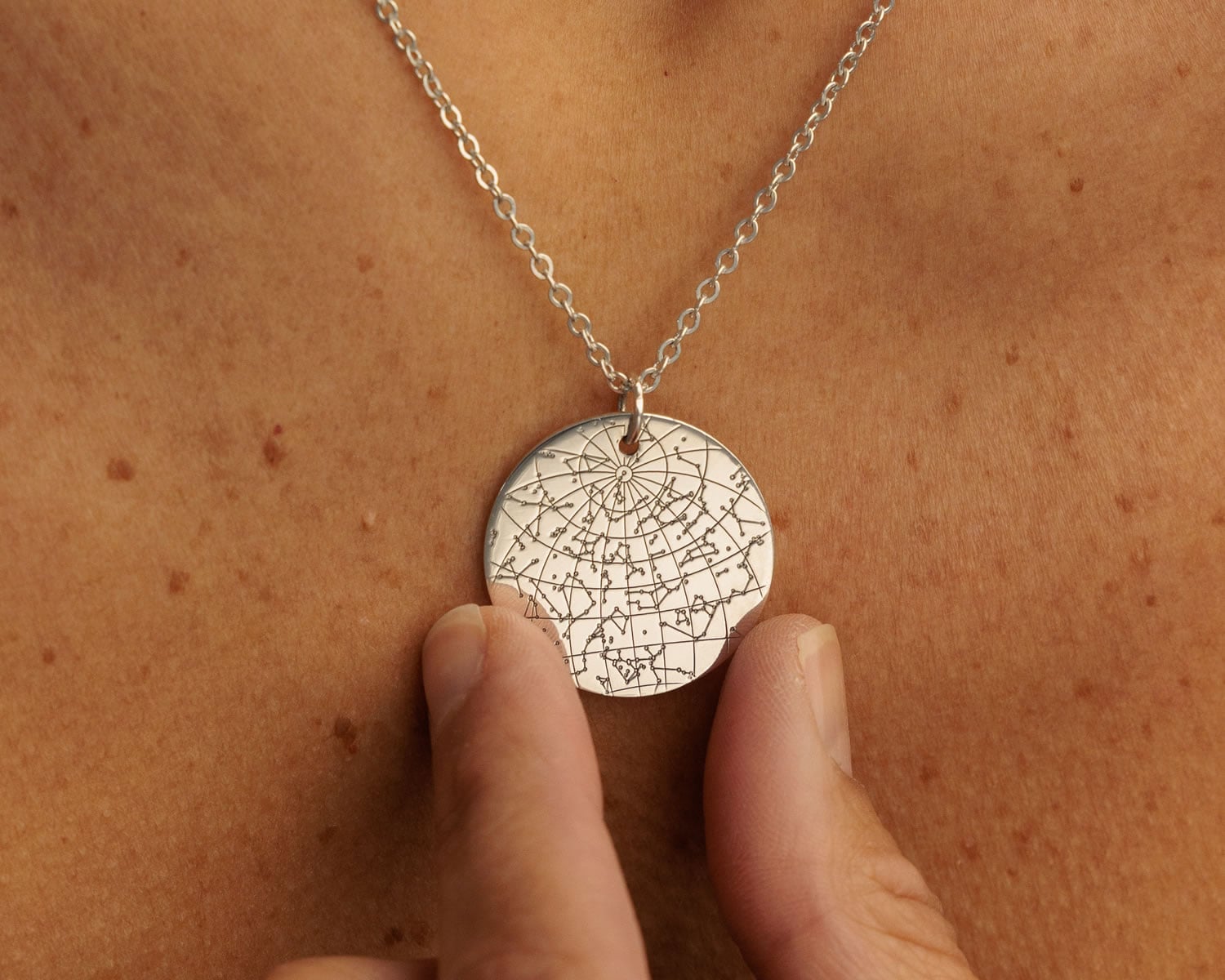
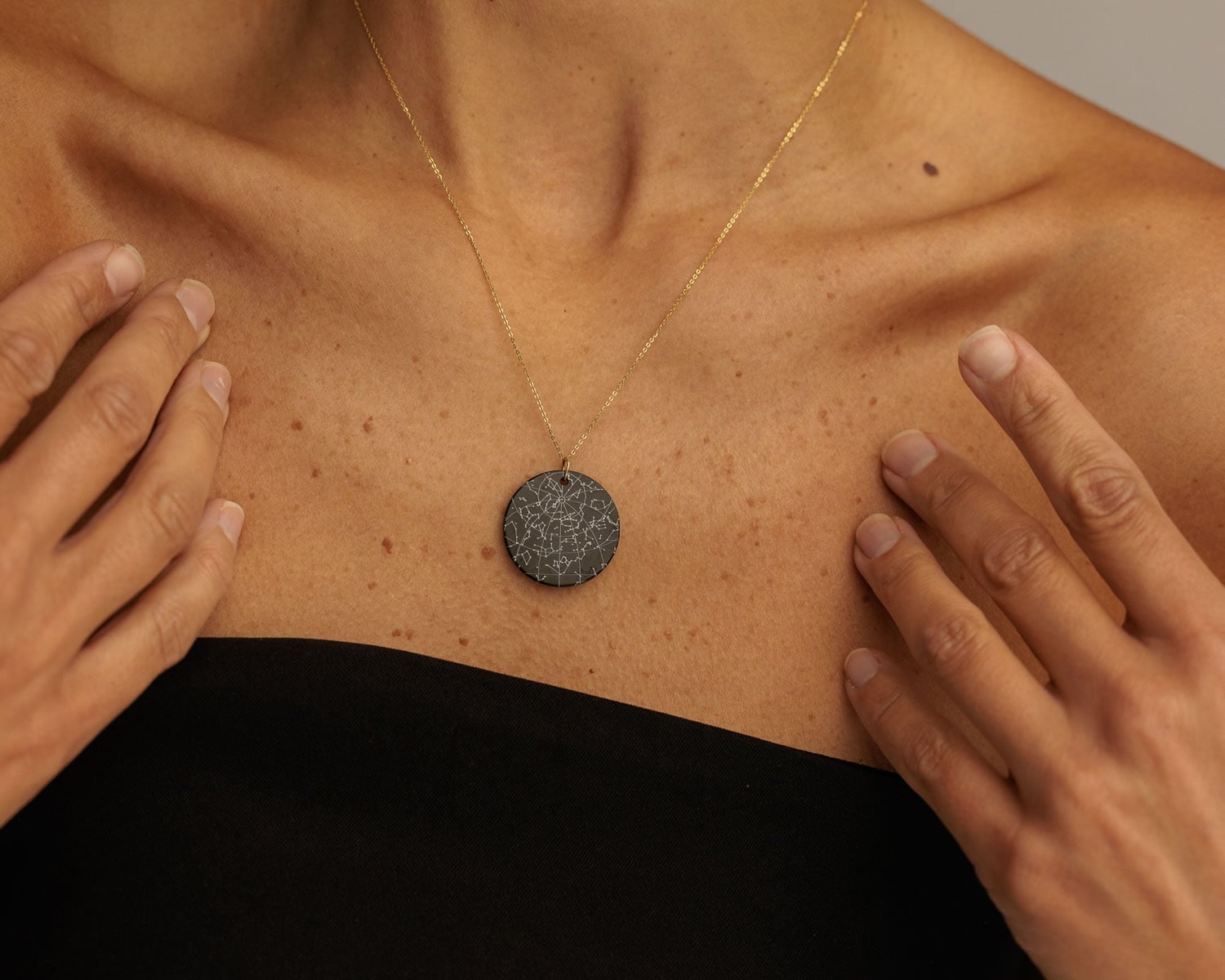
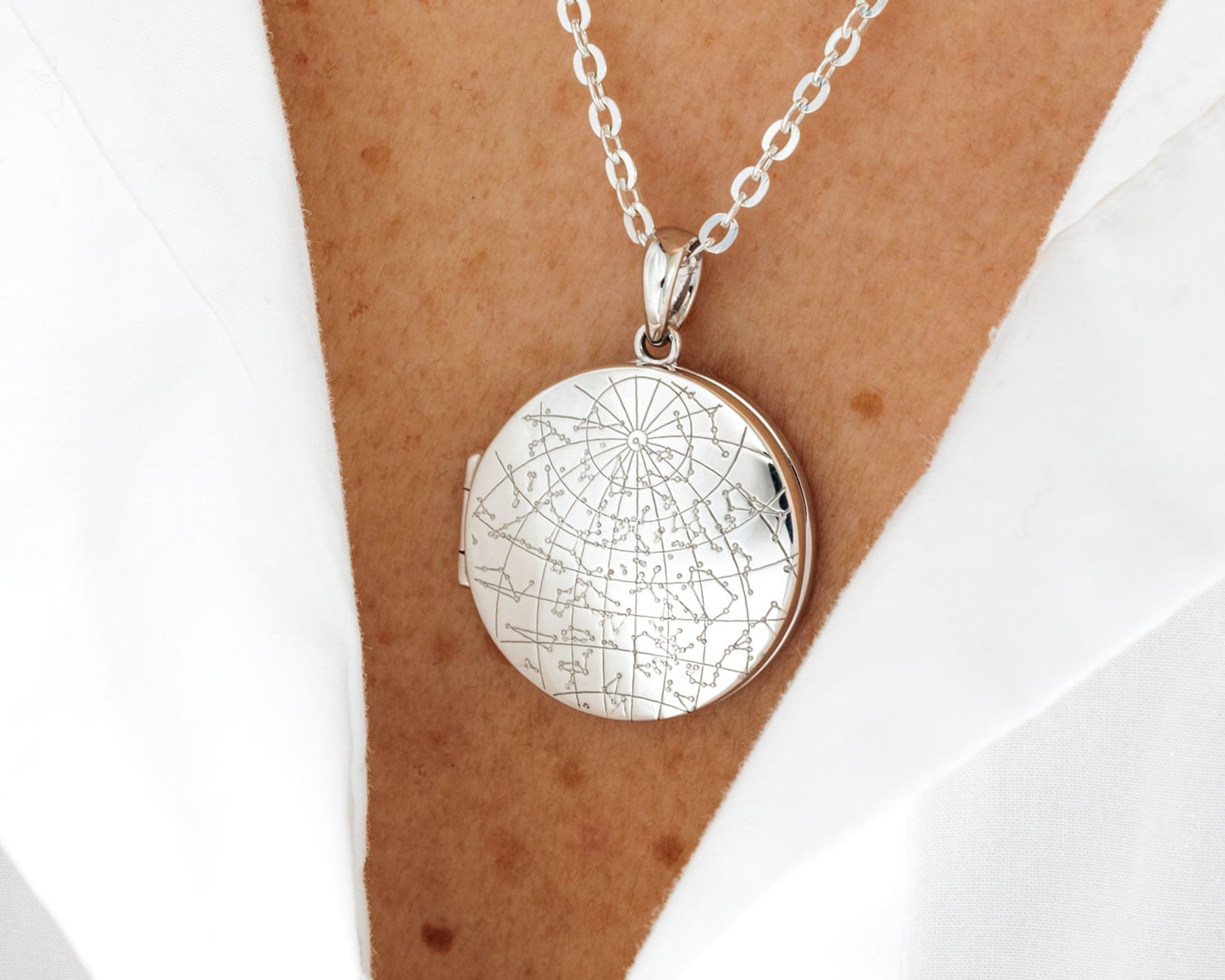
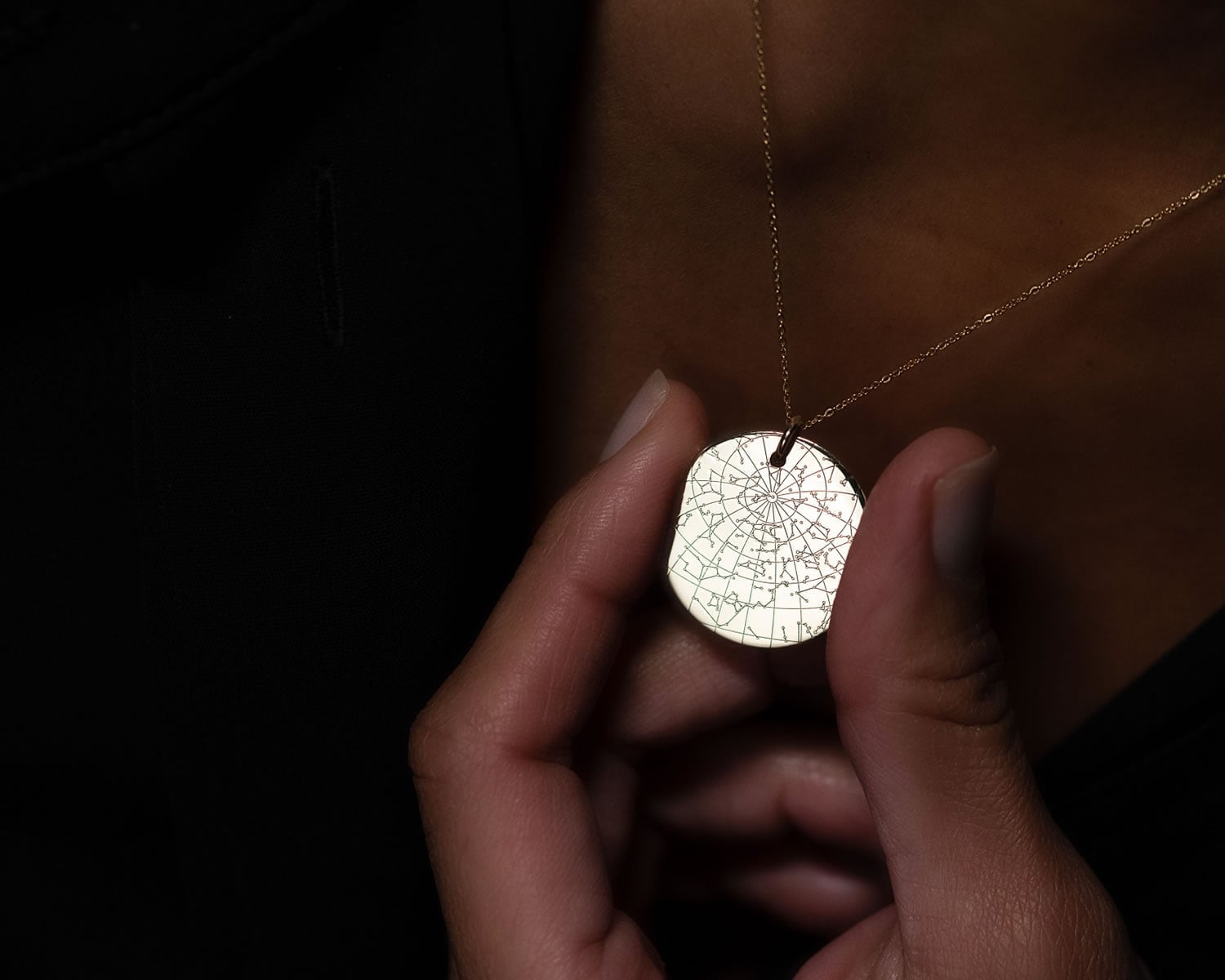
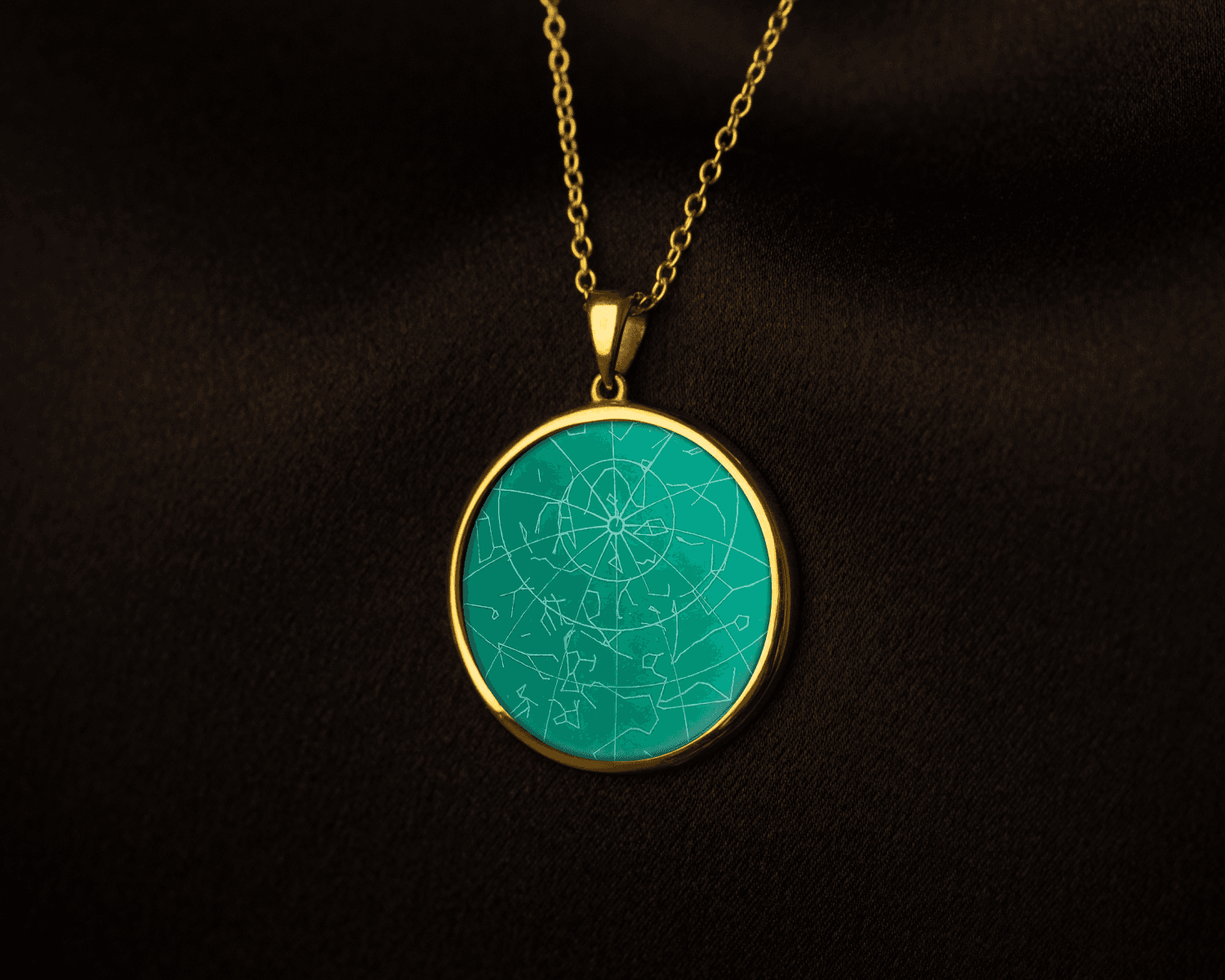
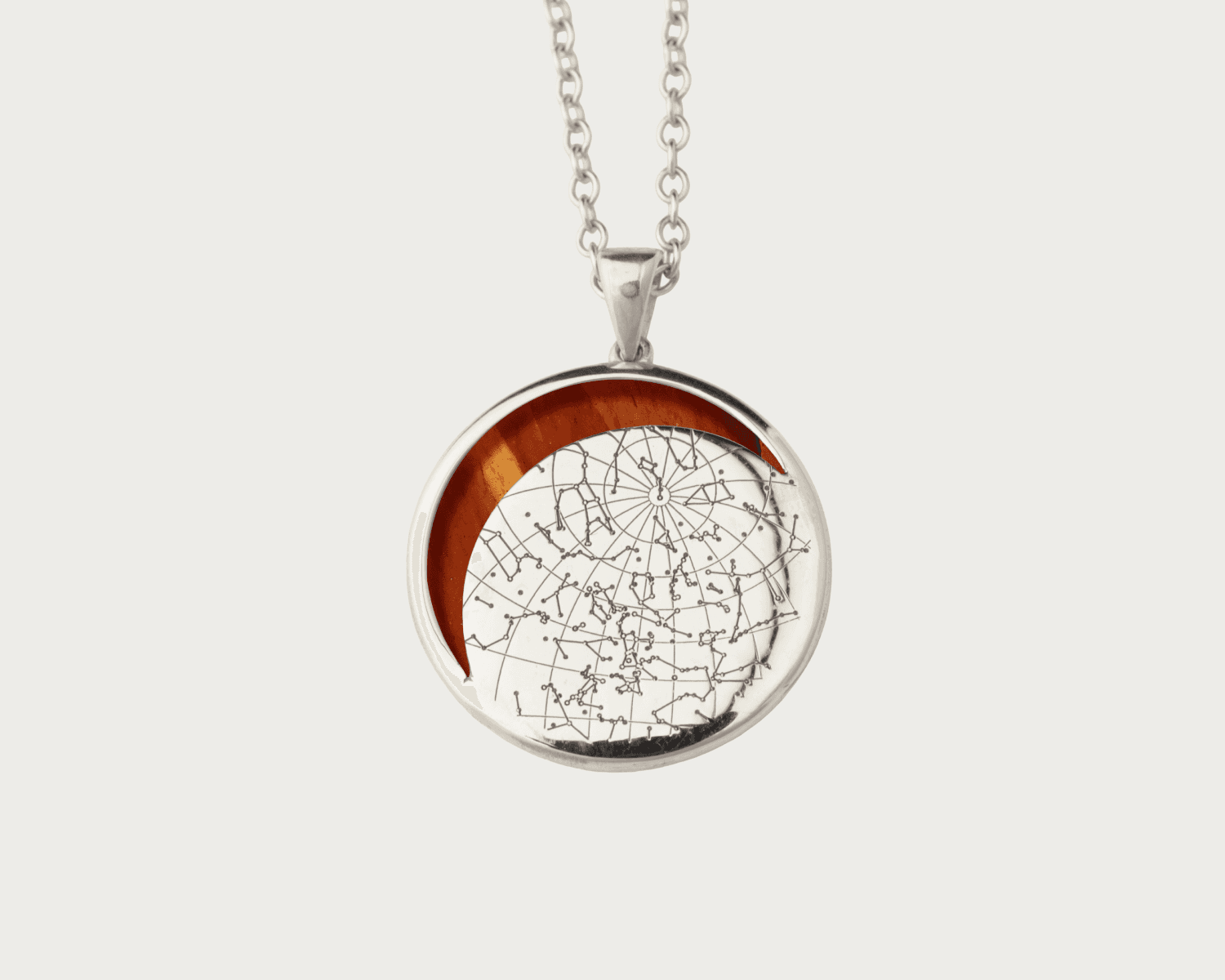
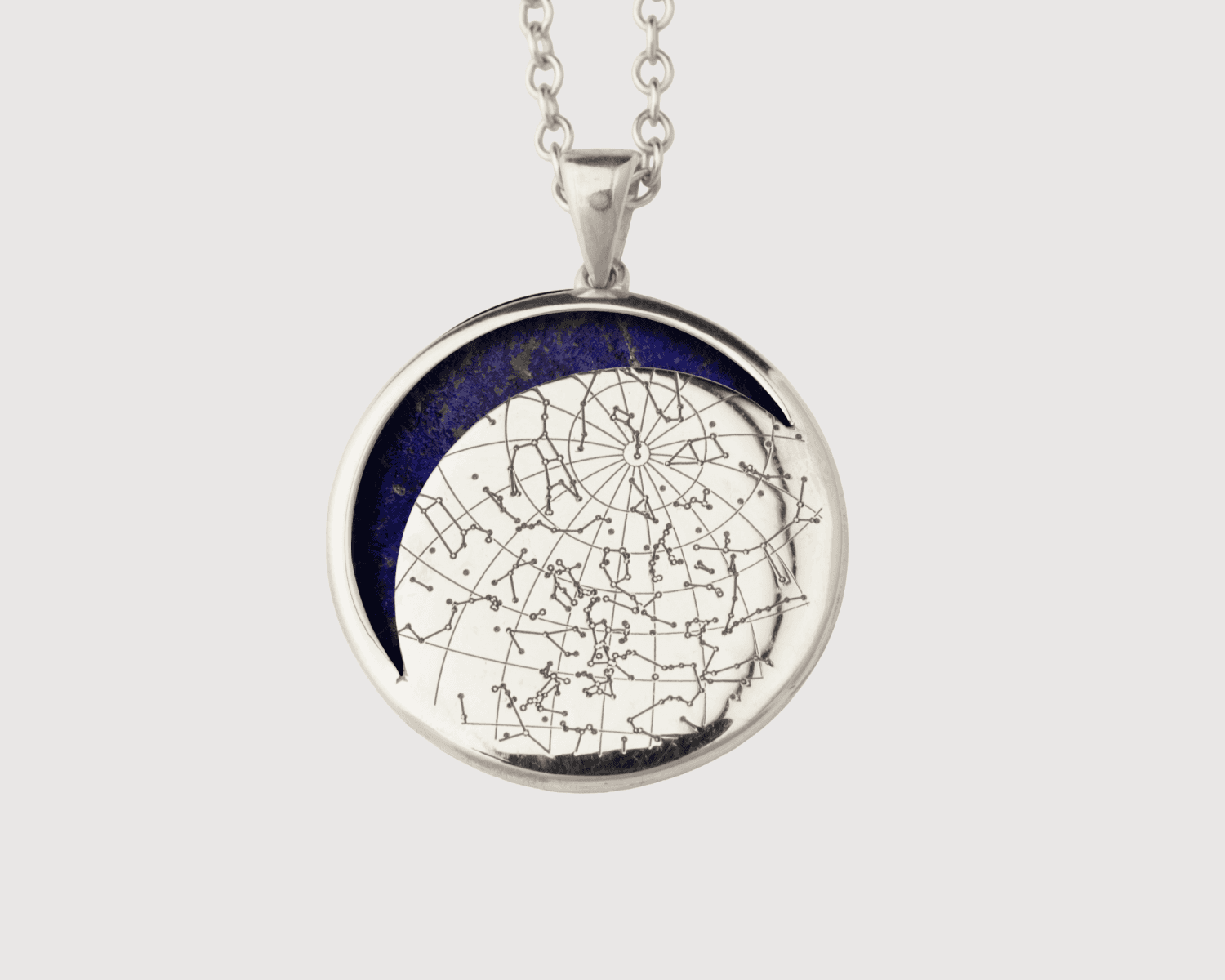
At The Night Sky, we pair natural lapis lazuli with our patented Eclipse Bezel setting: a crescent moon cut-out that reveals the deep blue and golden pyrite of the gemstone beneath, while the face of the piece is engraved with a real star map or zodiac constellation of your choosing. There is something poetic about combining lapis lazuli, a stone the ancients called "the heavens," with a map of the actual night sky from your most meaningful moment.
Our pieces are crafted in sterling silver and 18k gold vermeil using recycled metals. The deep celestial blue of lapis lazuli pairs beautifully with both finishes, creating something personal, intentional, and genuinely striking.
"Absolutely delighted with this pendant. It is a beautifully made piece and would definitely purchase again." - Trustpilot Review
Explore our full lapis lazuli jewellery collection, or browse our wider crystal jewellery range to find the stone that speaks to you.
Is Lapis Lazuli a Birthstone?
Lapis lazuli is recognised as an alternative birthstone for September. If you were born in September and want something with deeper celestial energy than the traditional sapphire, lapis lazuli is a meaningful and historically rich choice. Its connection to wisdom, truth, and the night sky makes it a particularly fitting stone for those who value self-knowledge.
Discover our birthstone necklace collection to find a piece that pairs your birth month with the power of natural crystal.
Frequently Asked Questions
What does lapis lazuli mean spiritually?
Spiritually, lapis lazuli is the stone of wisdom, truth, and inner vision. It resonates with the third eye chakra and is believed to enhance intuition, deepen self-awareness, and open pathways to spiritual insight. The ancient Egyptians associated it with the night sky and the divine, and it has been used in spiritual practices for over 6,500 years. Many people use it during meditation to sharpen clarity and connect with deeper knowledge.
What are the healing properties of lapis lazuli?
Lapis lazuli is associated with emotional balance, mental clarity, and honest self-expression. Practitioners link it to immune support, headache relief, healthy sleep, and throat health. Emotionally, it is valued for encouraging truthful communication, easing stress, and helping people confront difficult feelings with compassion. Spiritually, it is considered one of the most powerful stones for enhancing intuition and creative insight.
What chakra is lapis lazuli associated with?
Lapis lazuli is primarily associated with the third eye chakra, the energy centre governing intuition, perception, and higher awareness. It is also connected to the throat chakra, which governs communication and self-expression. This dual connection is what makes lapis lazuli especially valued for both inner knowing and the ability to express that knowledge clearly and honestly.
Is lapis lazuli good for anxiety?
Many crystal healing practitioners recommend lapis lazuli for anxiety and stress relief. Its calming, deep blue energy is believed to quiet an overactive mind, bring mental clarity, and encourage a sense of inner peace. While it is not a substitute for professional medical support, people often find that wearing or meditating with lapis lazuli helps them feel more grounded, centred, and emotionally balanced during difficult periods.
How can you tell if lapis lazuli is real?
Genuine lapis lazuli has a deep, rich blue colour with visible flecks of golden pyrite and sometimes white streaks of calcite. It feels cool and heavy in the hand. Fake lapis is often dyed howlite or jasper, which tends to look too uniformly blue, without the natural variations and golden inclusions of the real stone. Real lapis lazuli will not have a perfectly even colour. Those natural imperfections, the pyrite stars and calcite veins, are what make it authentic and beautiful.